Spring has sprung – well, nearly.
From my desk, I can look out of the window and be fooled into thinking that spring’s arrived. Daffodils are in full bloom, buds are popping out from branches, and, if my vantage point included any fields of sheep, I’m sure the lambs would be racing round. Of course, if I actually open the window, it’s still flippin’ freezing outside. Still, the end is in sight – the days of heavyweight rugs, snow stopping play and ice on water troughs are almost behind us for another year. Here’s to some warmer weather!
Five Reasons to Love Spring
- It’s the start of the proper competition season. Whatever you enjoy doing, everything from dressage to fun rides is starting up in earnest.
- Seeing the horses going out without rugs for the first time – can’t beat that first roll of the season.
- Lighter nights mean longer hours in the field and less mucking out.
- Evening rides.
- Being able to ride in lightweight clothing, rather than Scott of the Antarctic layers.
However, there are disadvantages as well:
Five Reasons Why We Should Hibernate Until Summer
- Spring fever. Suddenly, all the horses are going completely doolally – “Look, a leaf! My god, a chicken! Better escape whilst I can…” That’s fine, but I’d rather they got on with it when I was safely on the ground.
- Increased laminitis watch, leading into sweet itch season.
- Horse hair everywhere from shedding winter coats. At this time of year, you’ll find it gets into the oddest of places – just don’t wear anything fleecy to the yard.
- Having to make a decision on an almost hourly basis about whether or not to rug. And mostly getting it wrong.
- My mare coming into season. ‘Nuff said, the minx.

Oooh, that's better! The first roll of the season is the most satisfying.
Can You Afford to Save Money With Your Horse?
As we all know, horses are an expensive hobby. We’re all trying to save money at the moment – but where is it safe to cut corners?
Horse & Hound recently ran a story about riders with Point Two safety jackets, a type of body protector that’s designed to inflate on impact like an air bag. The jackets retail for between £400 and £600, depending on the model. The air canisters that power the jackets require replacing after each use, and some riders are choosing to save money by using cheap canisters from Hungary, instead of Point Two’s own product. The foreign canisters cost £2.50, as opposed to £17.50 for the ‘proper’ version.
It’s easy to see why riders are tempted – but when Point Two researched the cheap canisters, they found that four out of five failed to activate on impact, making them a very dangerous choice.
There are some areas where it’s possible to save money on equipment and clothing – but anything that compromises your own or your horse’s safety is a false economy.
Rugs
Most of us spend extortionate amounts on equipment. I think my horse’s wardrobe is probably worth more than mine, and it’s considerably better designed. A decent rug costs well over £100 these days, and if your horse is a bit of a rug-wrecker, you could be looking at a new rug a year. Try to buy a decent quality rug second-hand, as they tend to be better cut. Cheap rugs are often not deep enough, offering little protection, and can rub and chafe. Rugs are often advertised on tack room notice boards, riding club newsletters or on eBay. Once you’ve got the rug, look after it. You can buy glue-on rug patches online, or use plaiting thread to sew up rips. Re-proof outdoor rugs once a year, and wash stable rugs.
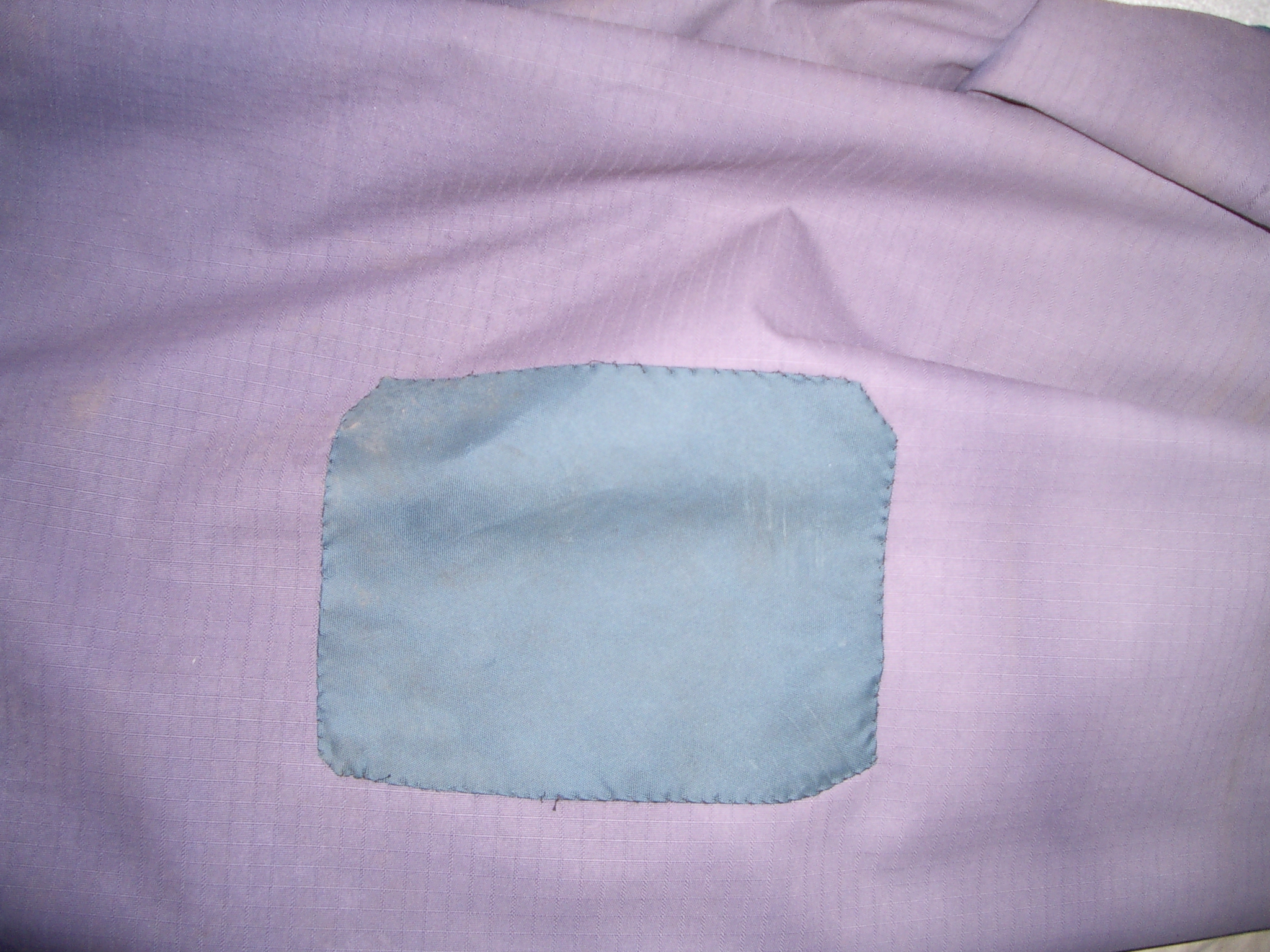
Mend rugs by gluing or sewing on patches when necessary.
Tack
Check your tack every time you clean it, paying particular attention to worn stitching. Most saddlers will undertake minor repairs for a few pounds, and it’s almost always cheaper than replacement – but this is one area where you need to leave it to the professionals. Don’t try to repair your own tack, as it’s subject to a great deal of strain, and a poor repair will cause a weak point. Cleaning your tack regularly will help prolong its life.
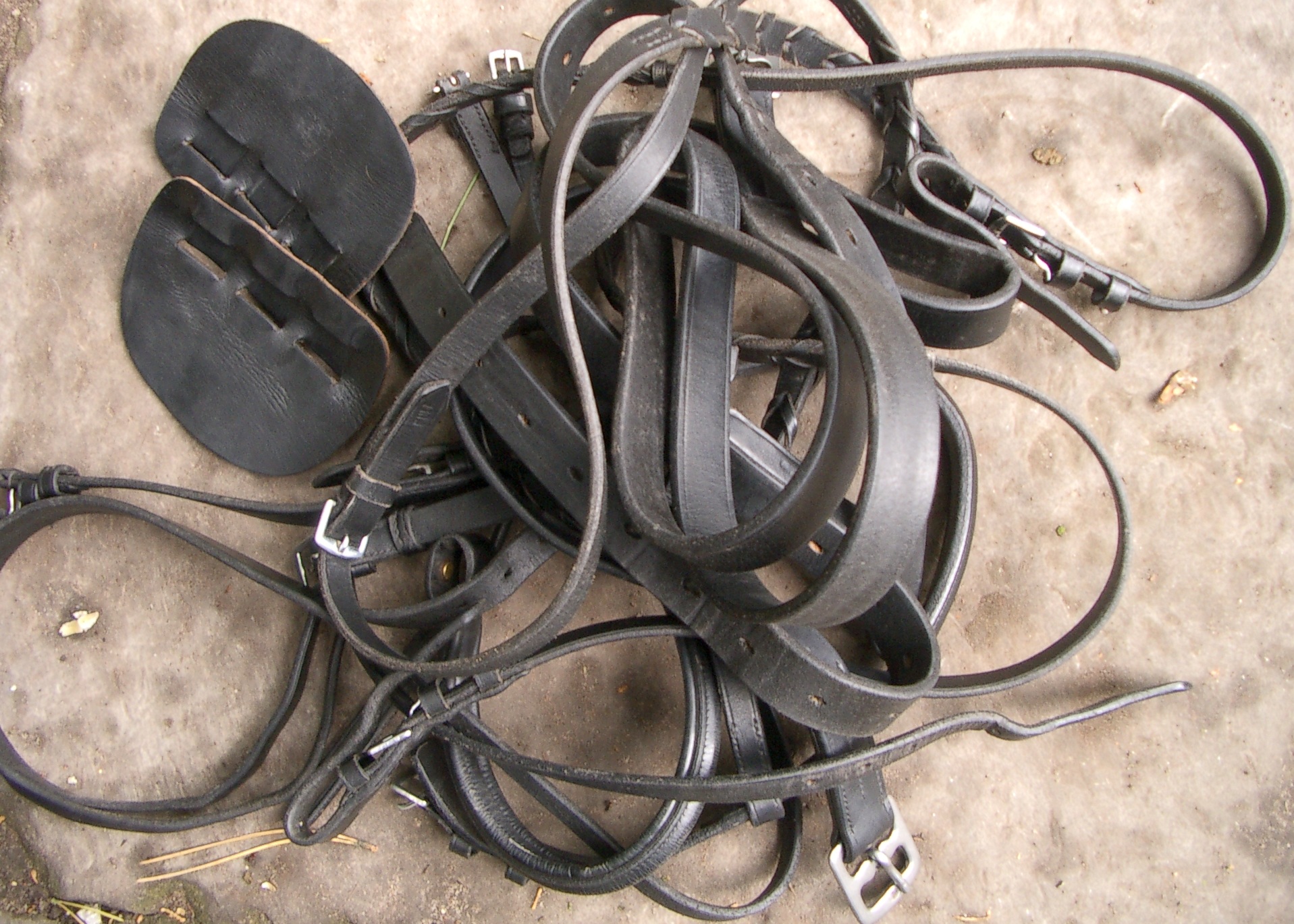
Take tack to pieces and check all the stitching on a regular basis.
Feed & Feet
Never be tempted to try to save money by feeding poor quality hay or feed. If your horse develops a persistent dust cough or other problem as a result, the vet’s bill will far outstrip any potential savings.
Equally, trying to scrimp on the farrier will cost you money in the long-term. Well-maintained feet generally give little trouble, whereas neglected, over-long feet can cause a range of problems from sandcracks to ligament damage.
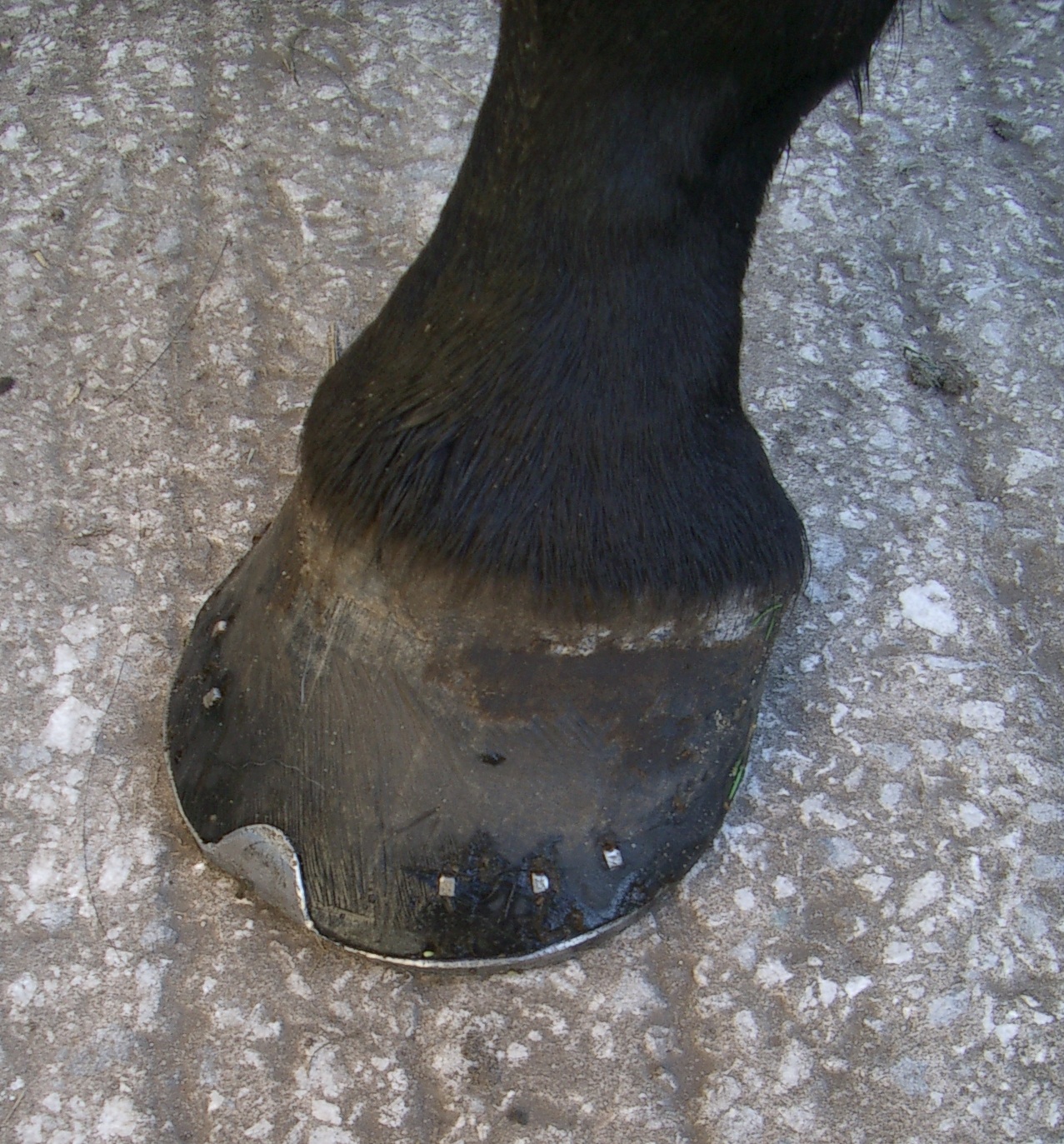
Spending money on the farrier helps prevent problems with feet.
Rider Clothing
Rider clothing is all designed with a purpose in mind, whether it’s safety or comfort. If you ride frequently, you’ll need at least a hat, jodhpurs, riding boots, riding gloves, and a decent riding jacket.
Don’t try to save by buying a secondhand hat, as you won’t know its history – if it’s been dropped or used during a fall, it wont protect you properly. Other items can all be bought secondhand if necessary, and it’s worth buying the right gear for the job. Jodhpurs have no inside seam, unlike jeans, and are stretchy enough to allow a full range of movement. Riding boots have a smooth sole and a half-inch heel, which help anchor your foot in the stirrup. Riding gloves are strategically padded to stop hands slipping, and a proper riding jacket will protect your shoulders, back and thighs from bad weather. If you have a decent jacket, you can get away with wearing cheap tops or T-shirts underneath.
DIY
It’s easy to make haynets from old baling string, but they’re quite time-consuming, and don’t last as long as commercial nets. If your lead rope breaks, you can save the clip and replace the rope with a plaited length of baling twine, however this won’t be as soft as a cotton rope, and could rub your hands.
Depending on your horse, it’s sometimes possible to make your own fly spray or to use human shampoo and conditioner instead of the equine equivalent – but check for sensitivity first.
Keep old blankets, duvets and sleeping bags (cut the zips off first), as these make great under-rugs in the winter.
There are lots of other ways you can save on equipment – for example. wedging buckets in tyres to prevent them from being knocked over, rather than investing in rigid troughs. However, always consider the safety angle before making a decision based on price alone – the consequences of an accident could prove very expensive.
Taking Responsibility – The Kara Goldsmith Test Case
Following on neatly from my recent post Riding for a Fall, I’ve recently been following the case of Kara Goldsmith, a 39-year-old mum from County Durham, which set me thinking about the topic of responsibility and liability.
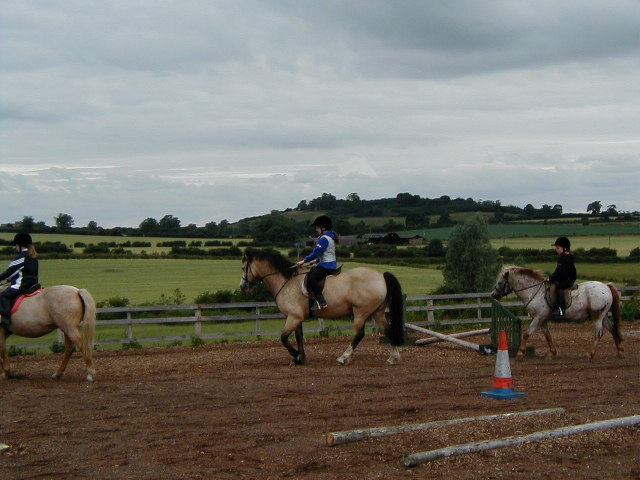
The Kara Goldsmith case could impact riding schools - Photo Peter Shone
Kara Goldsmith’s Case
I’ve only seen reports of the case in the Daily Mail and the Telegraph, and there’s not a lot of detail. Briefly, Mrs Goldsmith went to try a horse called Red, who was being given away free as his previous owner had had a fall and lost confidence in the horse. After riding for 20 minutes, Red apparently reared straight up then bucked violently until Kara fell off.
The incident that turned this case into a media event, rather than an unfortunate accident, was that Red’s hoof caught Mrs Goldsmith’s face in the process. Her injuries meant that she had to undergo multiple operations to rebuild her face, and has been left with nerve damage and ongoing pain. She subsequently tried to sue the horse’s keeper, Bradley Patchcock, on the grounds that the horse’s behaviour was abnormal and unforeseeable. The case was originally rejected, and is now being appealed.
The Consequences
This case is being treated as a test case, and has far-reaching consequences for the horse world. Mrs Goldsmith’s case was originally rejected on the grounds that riding is a risk sport, and as an ‘experienced’ rider she was aware of the fact that horses could buck, and was voluntarily assuming that risk.
She’s appealing on the grounds that the horse’s behaviour was abnormal for the species and couldn’t have been reasonably foreseen.
If the appeal is upheld, then potentially anyone who wants to sell a horse – or even allow a friend to ride – will be affected. We’ll have to check that the would-be rider carries their own insurance, can provide some proof of ability or is willing to sign a disclaimer – probably enough to put most people off.
Insurance premiums will almost certainly be affected, and it may even cause more of our beleaguered riding schools to close down. My local riding school already has a huge waiting list, as it’s now one of the last schools in the area. It’s not beyond the realms of possibility that soon people simply won’t be able to learn to ride from scratch – as no-one will want to take the risk of teaching them.
The Fine Print
There are a lot of details about this case that don’t appear in the press stories, which I believe would have a bearing on the outcome. Mrs Goldsmith has described herself as an ‘experienced rider’, but she seems to have acted in a fairly naive way for an experienced person.
Before going to see the horse, did she get the full details of how and why the previous owner had fallen and lost their confidence?
Did she see the horse ridden by someone else? If no-one was available to ride, did she see the horse worked on the ground, or work it herself?
Did she check whether the horse had seen a dentist, vet or osteopath, for diagnosis of physical problems?
Any horse is capable of throwing its rider. Any horse can react in an unexpected way. Any experienced person knows this.
The way that this horse is described as reacting is typical of a horse in pain. Rearing is the ultimate refusal to go forwards, and is normally a reaction to fear or pain. The fact that the horse was then desperate to get rid of his rider is also a typical reaction.
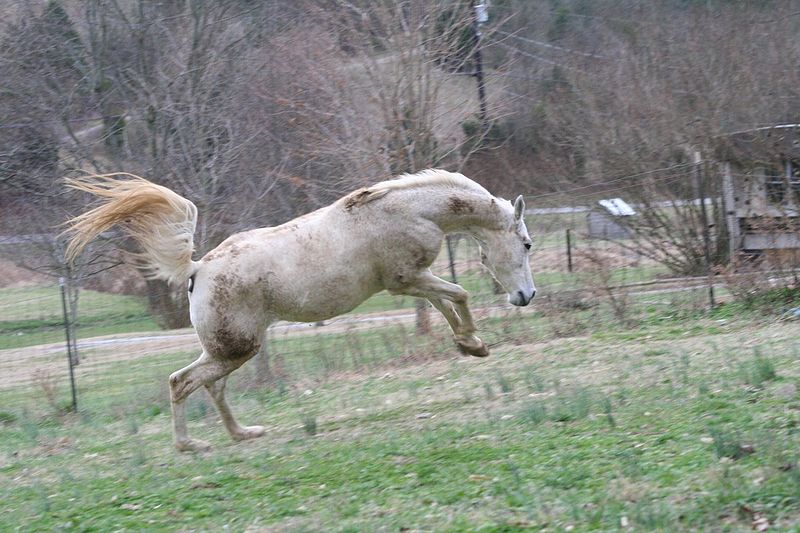
All horses buck - but repeated bucking to unseat a rider can be indicative of problems. Photo - Daniel Johnson
No horse is ever given away for free without an extremely good reason, and that fact should have made the rider more wary than usual, and anxious to extract a full case history.
Mr Patchcock is described as the horse’s ‘keeper’ rather than owner, and in fact may not have known anything about the horse’s previous behaviour – which again should have made the potential rider more wary, and keener to see the horse worked first before getting on.
Interestingly, of the hundred-odd comments posted on the Daily Mail article, almost all seemed to be along the lines of “These things happen with horses, and when you get on a horse you accept that risk. No-one’s liable.”
I remember going trail riding in America a few years ago, and having to sign a disclaimer document that covered three pages of closely-written A4 before being allowed to ride a quiet, 27-year-old pony at a walk with a group of other people. If this appeal goes through, this could be the very tip of the iceberg.
Of course, Mrs Goldsmith’s injuries were dreadful and extremely regrettable. But anyone’s fault? I don’t think so.
Riding for a Fall
For most horse riders, the idea of taking a tumble is a constant presence at the back of our minds. Horses are big, powerful animals, and they can move fast. Fall from the back of a 16.2hh horse that’s galloping at 30 miles an hour, and you could really do yourself some damage. The surprising thing is that more of us don’t.
In all my years of riding, I’ve never had a bad fall (touches wood frantically). I have a large circle of riding friends and acquaintances, all of whom fall off occasionally. I know several people that have cracked wrists or tweaked backs, but I only know two people who’ve had bad falls – a broken pelvis and a cracked vertebra respectively – and both had an above average amount of bad luck. Both riders recovered fully and went back to riding at their original level.

The most spectacular falls are often the least serious. Photo by Thowra_uk
I’ve been following the progress of Michelle Reid, the Times columnist who suffered a devastating riding accident which left her in a wheelchair. In her column, she’s charting the highs and lows of her rehab process, and recently wrote about her first emotional post-accident encounter with a horse, an article that was reproduced in the Nov/Dec 2011 issue of British Horse, the BHS magazine. Her accident happened when her horse refused a small jump during a training session – something that happens to most of us regularly – and again she had very bad luck to suffer such serious injuries. She writes of the feelings that visiting a friend’s horse has reawakened, and of her fear that she might never feel strong enough to face her own horse again.
Michelle’s case is an extreme one, and the extent of her injuries mean that she’s facing challenges I can’t imagine. However, even if there’s no injury involved at all, it’s easy to lose confidence after a fall. Once you’ve lost faith in a particular horse or activity, it can be very difficult to get it back. It’s an issue that many of us end up having to face, and there are tried-and-tested methods of tackling it.
Take Control
- Think about what happened and why. Could you avoid putting yourself in that particular situation again in the future? Can you work on the cause of the accident? If your horse spooked at a new hazard, like a tractor, find a friendly farmer and practice de-sensitising your horse. Take control of the situation, and you’ll reduce the chances of it happening again.
- Get your horse checked out. Many bouts of ‘bad behaviour’, such as unexplained, sudden bucking can be traced to physical pain. If your horse is behaving uncharacteristicly, he could have a bad back or sore mouth.
- Be prepared. Always wear a hat – this will reduce your chances of injury dramatically. Remember Oliver Townend’s spectacular fall in 2010? Amazingly, he suffered only minor injuries. Consider wearing a back protector as well, and do all the normal safety checks on your tack from time to time.
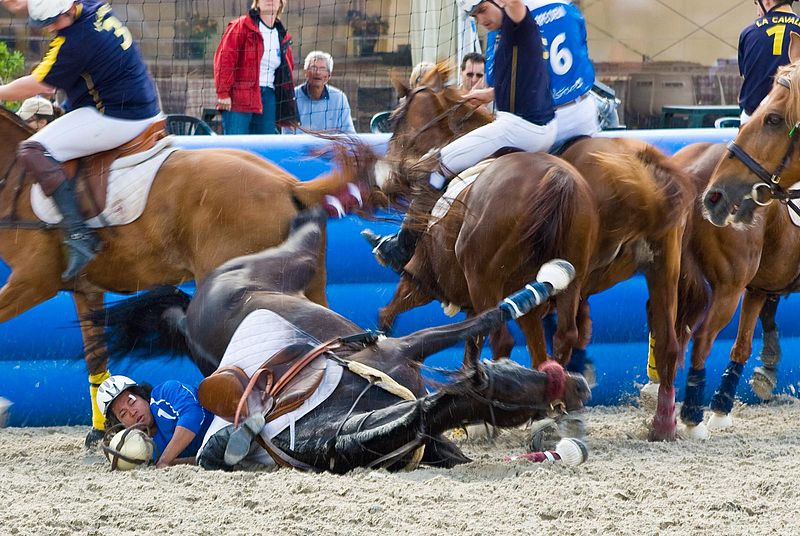
Neither horse nor rider were hurt in this frightening-looking fall. Photo by Jean-Louis Vandevivère
Know Your Limits
Over the years of my partnership with Blue, I’ve learnt to recognise her ‘triggers’ – and now I avoid them. For example, she’s never liked tractors, but I know that if I can find a gateway or somewhere else where there’s a little space, she’ll be fine. All the local tractor drivers are used to us now, and are normally extremely patient. However, I wouldn’t take her hunting, or ride her in a procession, because I know she’d get too stressed.
Get Your Confidence Back
- Ride a friend’s horse. Changing your own mount for a schoolmaster for a while can help to restore confidence when you get back on your own horse.
- Do something different. Sign up for a holiday with your horse or go on a long distance ride with friends. This will help strengthen the relationship with your horse, and remind you that riding’s meant to be fun.
- Get someone to help. If your fall was a result of a weak seat or postural problem, a good instructor can help you work on this.
- Send your horse away for reschooling. If your horse is exhibiting a certain type of behaviour that causes you to fall, such as spinning round or rearing, consider sending him to a professional. Get him checked by a vet first though, to make sure there’s no physical trigger.
- Attend a confidence workshop. The instructor will teach you a series of techniques to help you manage your nerves and overcome them – many people find this approach very beneficial.
- Learn how to fall. A high percentage of riding injuries involves damage to wrists, arms or shoulders, as the rider automatically flings an arm out to try and stop their fall. Watch some videos of jockeys falling off in races, and you’ll notice how they fold their arms into their bodies, tuck in their chins and try to fall onto the backs of their shoulders. Falling in this way will greatly lessen your chances of injury. Find a barrel or other low support, put it in the arena to give you a soft surface, and teach yourself to fall.
- Sell your horse. Riding is supposed to be an enjoyable hobby. If you’ve reached the stage where you’re constantly tense and nervous every moment you’re in the saddle, and the only time you smile is when it’s time to get off, then consider ending the partnership. Struggling on regardless does neither of you any favours, and it could be time to look at forming a new partnership with another horse.
Homemade Christmas Presents for Your Horse
At this time of year, the feed merchants are full of commercial horse treat gifts – horse stockings, biscuits and sweets. Like anything else to do with horses, they’re expensive – and will your horse really appreciate them? If you don’t want to leave your horse out, try making some treats. Not only will they be a much cheaper option, you’ll also have the advantage of knowing exactly what’s in them.

Deck the halls with boughs of haylage, falalala-la-la-la-la
Homemade Horse Treats
Ingredients
- Two large carrots, washed but not peeled
- Two good tablespoons black treacle or molasses
- 1 cup porridge oats
- ¼ cup vegetable oil, plus extra
- 1 cup wholewheat flour, plus extra
- Line a baking tray with aluminium foil, and grease the foil lightly with oil.
- Grate the carrots roughly into a large bowl (a food processor makes this step a doddle)
- Add the oil and oats. Warm the treacle for a few seconds in the microwave, then add that as well.
- Work the mixture together, then add the flour. The mixture should be fairly stiff, so that you can work into small balls with your hands (put some flour on your hands first to make it easier).
- If the mixture is too sticky, add some extra flour. If it’s too stiff, add a little extra oil.
- Form the mixture into small balls, and press them lightly onto the baking tray.
- Put the tray into the oven on a very low heat – the idea is to dry the treats out so that they can be stored. The more you dry them out, the longer they’ll last. When done, put them on a wire rack to cool then pack into airtight containers.
The treats also work well with apples, although you may have to use a little extra flour to bind them together.
Please remember – horses do not react well to sudden changes in their diets. Only give these treats in limited numbers (one a day). They contain oats and molasses, which are fine in small quantities for most horses but can cause problems for horses with laminitis or other health problems, and should not be fed at all to any horse on a very restricted diet.
Top 7 Essential Winter Riding Kit
I’ve just come back from a truly teeth-gritting ride. It started out with a drizzle, and I thought, ‘Hey, I’m all ready now and it’s not raining too hard. I’ll go anyway.” A mile out of the yard, the heavens really opened. Drizzle turned to hail, which started to melt and run down the back of my neck. Poor Blue hunched her quarters to the wind and glared at me from the corner of one eye, before trotting home as fast as possible in a pointed manner.
Riding in poor weather can be really miserable. But I made it hard on myself. Just back from France, this is the first really wintery ride I’ve had, and I was still wearing my summer boots and gloves, which were instantly soaked. Definitely time to break out the winter kit. Here are my top seven essential items of kit.
1. Waterproof chaps.
Every step of the way this morning, I was wishing I’d put mine on. They are brilliant, and stop the front of your thigh turning numb with cold. Most of the big manufacturers make a version – mine are from Derby House, and cost around £30. Some also have reflective stripes or flashings for added visibility on the roads. Make sure you try them on before buying, and that you can bend your knee comfortably whilst wearing your normal jodhpurs and boots. I like these from Harry Hall.
2. Warm boots.
There’s nothing worse than cold toes. If the misery doesn’t spoil your ride, you’ll notice when you jump off at the end and can’t feel your feet. I still like the original Rimfrost Rider boots from Mountain Horse – they seem to keep even the harshest weather out. Friends have said they aren’t as robust as other brands, and I don’t find them comfortable to walk in, but I keep my pair just for riding and five years later they’re still in top condition. Competitively priced as well.
3. A decent jacket.
I don’t like too much bulk when I’m riding, so tend to go for a thin jacket that I can layer up with fleeces. My current jacket is from Luna Rider, a thin fluorescent waterproof jacket that I can wear over a gilet. Very good value at around £25, my only niggle is that it could be a bit longer to give more coverage – and Luna Rider do now make a longer version.
4. Gloves
I struggle with winter riding gloves. I don’t like bulky gloves, and the thinner ones tend to offer little protection against the weather. Pigskin gloves are the most weatherproof I’ve found, but are expensive. These Mark Todd gloves are excellent for keeping your hands warm, but I found they reduced ‘feel’ on the reins. If anyone has managed to solve the warmth vs. bulk problem, I’d love to hear about it!
5. Neckwarmer/fleece scarf
Although not really specialist riding kit, these are great for providing warmth without bulk and stopping that icy draught down your neck. Available from lots of places, try online retailers, outdoor and skiwear shops.
6. Horse exercise sheet
Whilst I’m wrapping myself up like the Michelin Man, I mustn’t forget my poor pony. She’s a fairly hardy type, but is currently trace clipped and needs a little help when it’s really cold. I have several exercise sheets, but mostly use a fluorescent one similar to this one from Shires. As I have a dark-coloured horse, I prefer not to use a dark-coloured rug in winter. I also like the fact that mine is cut away at the sides, so that it doesn’t ride back when I use my legs.
7. Seat saver
OK, so this is more of a luxury than a necessity – and it’s not great for use in the rain. But it’s lovely not to get onto a cold saddle in the winter, and it keeps you much warmer. The ultimate seat savers are these natural sheepskin ones from Nuumed – you’ll never want to get off again.
Preparing For Your First Pleasure Ride
Pleasure rides are long, organised rides covering a mixture of terrain. They’re not as demanding as formal endurance rides, and there are no vet checks involved. They’re run by local endurance groups as social occasions or for training purposes, and also sometimes by hunts and on behalf of charities. They average from 10 – 20 miles, and are great fun. They’re a useful way of socialising young or inexperienced horses, helping to get a horse fit or simply seeing new areas of countryside. Most rides are very well-organised and safe, with strategically-placed stewards at road junctions.
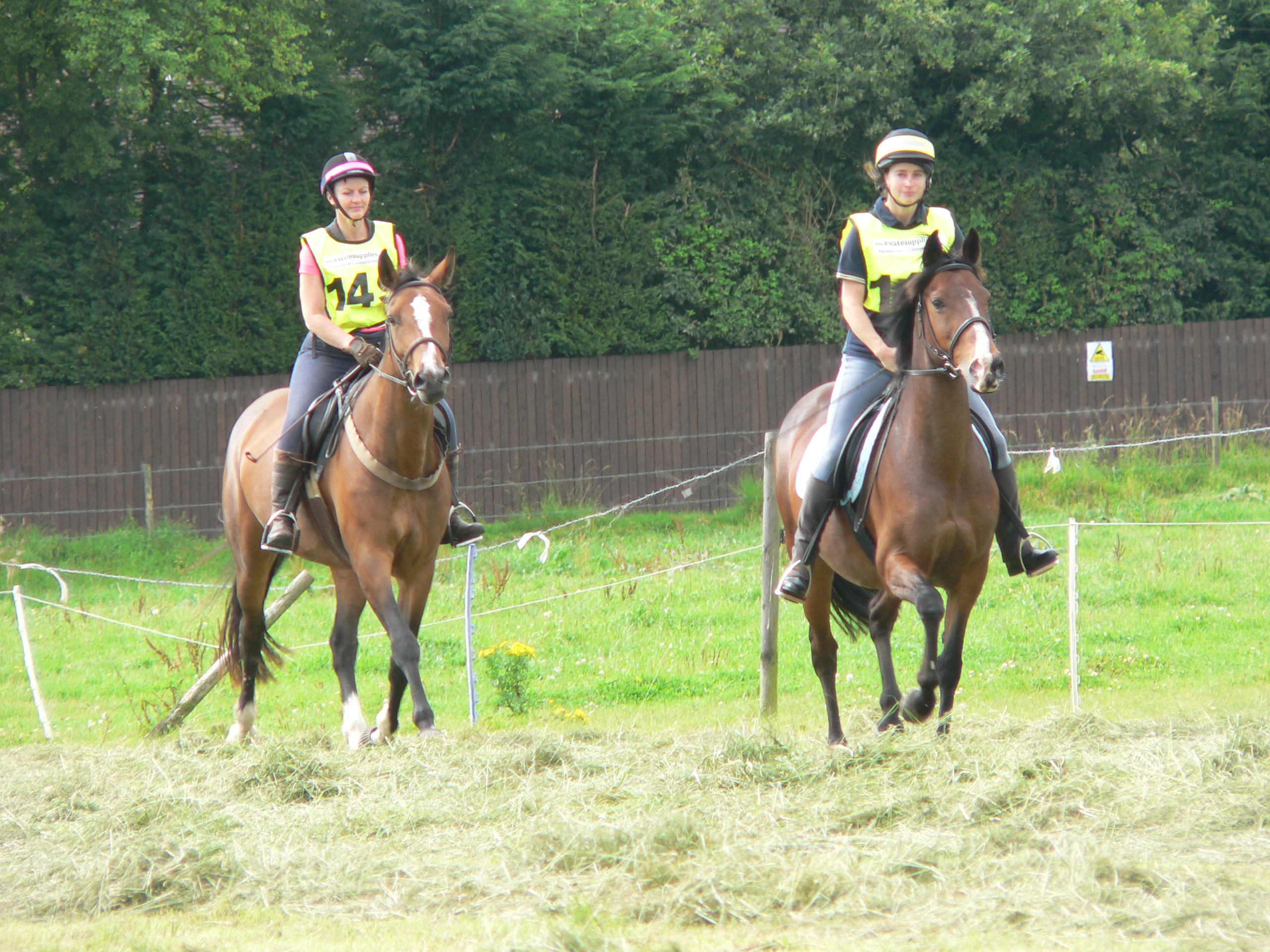
Pleasure riding with the Cheshire Endurance GB group in August.
How Do I Find a Pleasure Ride?
Look in local magazines, on tack shop noticeboards or riding club newsletters. Busy equine professionals such as farriers and vets often hear of local events, or contact your local endurance group.
How Do I Prepare?
Although pleasure rides are not as demanding as endurance rides, both you and your horse will need to be reasonably fit to enjoy yourselves. Assuming your horse is already hacking fit, start off a month before the ride by increasing your hacking at walk and trot until you’re comfortable riding for a couple of hours. Make sure your horse is well shod before the ride.
What Equipment Do I Need?
Your normal riding gear is fine, as long as it’s comfortable. Boots that you can also walk in are a bonus, as if there are any problems out on the route you may end up have to lead your horse. You must wear a hat to current safety standards. If you plan to do a lot of pleasuring riding you may want to invest in some endurance stirrups, which give a much larger support for the rider’s foot. Other useful things to take include:
- A drink
- Gloves. Even if it’s a hot day, your hands may get sore as the day goes on, particularly if you’re using rubber reins.
- A map case. These are useful so that you don’t have to keep the map in your pocket, but do practice riding with it beforehand as some horses don’t like the flapping noise.
- An energy or cereal bar
- A fully-charged mobile phone
- Plenty of tissues
- A small first aid kit including plasters
- fluorescent bands for your horse and a hatband for you if there’s any roadwork involved.
- A seat saver, that fits over the saddle to give you some extra padding
- Sweat scraper
- Water and bucket for your horse.
What Happens on the Day?
For your first ride, make sure that you arrive in plenty of time.
- Collect your map, route instructions and number and ask about any possible route changes.
- Use the loo if there is one – you may not get another chance!
- Progamme the emergency contact number into your mobile phone, with the prefix ‘ICE’ (In Case of Emergency).
- Tack up slowly – don’t rush, and make sure you have everything you want to take.
- Lock the car, and put a trailer lock on if you have one.
- Learn your number, and look at the first part of the route.
Most horses get a little excited on their first ride, so try to wait for a gap before setting off so that you’re not in a bunch. Give your number to the first steward, who’ll tick you off as having started.
On the Ride
If your horse is excited, start off with a brisk trot to settle him. On busy rides, there may be lots of attendees so it’s important not to get in other people’s way. If you need to pass another group, shout first to alert them and ask if it’s OK to pass. It’s normally best to pass at a trot then trot on out of the other people’s sight. Never canter past, and always stop if the other horses are getting upset. Check in with every steward you see, and thank them – remember that all the stewards are volunteers. Once you reach the middle of the ride, give your horse a break – let him walk out on a long rein for a few minutes to stretch. You can also take your feet out of the stirrups if it’s safe to do so. Try to walk the last mile or so of the ride to bring your horse in cool.
When you get back to the venue, check in with the steward. Untack as quickly as you can and sponge your horse down if he’s hot. Put on a cooler rug and offer a drink before taking your number back. If your horse is very hot and sweaty, let him cool off before travelling him home. Next time, you could bring some electrolytes to add to his drinking water.
After the Ride
Unless they’ve got very excited and galloped all the way round, most horses should have no ill effects the next day. You can go for a short ride to stretch the muscles if you like – but a day off won’t hurt!
Finding a Safe Path to Feeding Your Horse
With Zoe Davies, Msc Eq. S., R Nutr.
The newly formed New Barn Riders gathered in force on the 16th November to hear a talk by leading independent equine nutritionist Zoe Davies. Zoe is an expert on the subject, having published eight books on equine nutrition, and is also a regular contributor to HORSEScene magazine.
Zoe’s talk was designed to take the mystery out of feeding, and she walked her audience step-by-step through the process of choosing a diet to produce a healthy, habit horse.
“Many people are confused by the vast range of feeds on offer,’ she explained. “Most feed companies now produce a range of 15 – 20 different types, compared with the two or three on offer 20 years ago. Horse owners are understandably confused between all the feeds on the market.”
Zoe reminded us that every manufacturer is legally obliged to put certain statutory information on the bag, including the batch number, the nutritional analysis and the purpose of the feed, the ingredients being listed in order from the highest proportion to the lowest.
Large feed manufacturers use sophisticated milling and mixing equipment to ensure consistency of the feed, but with feed from smaller companies the quality, consistency and even ingredients may differ from bag to bag.
Many feeds have added ingredients such as vitamin E, which is a useful addition but expensive, meaning that many cheaper feeds have low levels of added vitamin E. Some manufacturers also add vitamin C; however this is not only unnecessary but can be harmful. Horses can manufacture their own vitamin C in their livers, and if fed additional vitamin C can gradually lose their ability to manufacture it.
“Most so-called ‘complete feeds’ are not ideal for horses in light work, as they must be fed according to the manufacturers’ instructions to give enough nutrients. This may equate to much more bulk that you want to feed.
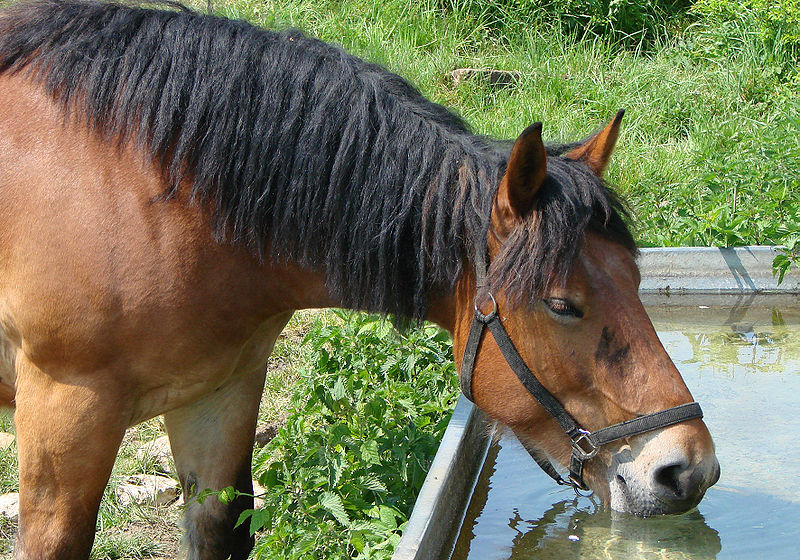
Always ensure your horse has free access to water. Photo copyright Vassil, Wikimedia Commons 2007
Another common problem area that I see with many horses is the use of cool mixes. Many so-called cool mixes, ostensibly designed to give your horse energy without ‘hotting up’, have very high starch levels. These feeds contain no oats, but do contain barley. True cool mixes should contain no more than 15% starch in order to have the desired effect. GAIN Easy Go is one of the lowest starch feeds on the market, containing only 8%.”
The increasingly competitive horse feed market has led to many manufacturers pushing vitamin, mineral and nutritional levels right up to the maximum permitted levels, in order to try and gain a competitive edge over their rivals. As a result, Zoe is starting to see more and more horses with toxicity of the liver.
“Most horses in light or medium work require only good quality forage and a balancer. Balancers provide a concentrated hit of vitamins and minerals, without adding bulk or unnecessary ingredients to the diet. They must not be overfed, and must be fed at the same rate every day.”
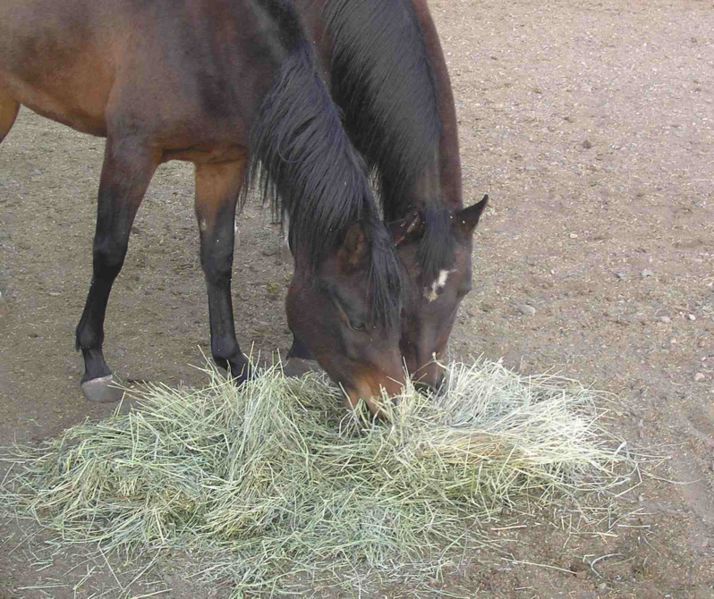
Feed good quality forage such as hay or haylage. Photo copyright BLW, Wikimedia Commons 2007
Zoe then moved onto the thorny topic of supplements. Any supplement that claims to have a medical benefit, such as the management of laminitis, must be licensed by the Veterinary Medicines Directorate. Many supplements designed to target a certain problem, such as poor hoof growth, contain many added vitamins and minerals in addition to those needed. If you are already feeding a vitamin supplement, you could be in danger of overdosing with certain nutrients. If possible, it’s better to feed ‘straight’ supplements such as biotin, which are specific to one area. Many people feed herbal supplements, believing they’re offering their horse the ‘natural’ alternative, but in Zoe’s opinion no herb should be fed long term as there has been insufficient research on the long term effects. An example of this is comfrey, which used to be available as a skin and coat conditioner and was later found to contain liver toxins.

Allow your horse free access to salt in the stable or field. Photo copyright Beentree, Wikimedia Commons 2007
Zoe ended her talk with a reminder not to over feed, always to follow manufacturers’ instructions for the best results.
New Barn Riders would like to thank Zoe for such an interesting, informative and thought-provoking talk.


 The Write Horse