Looking after your tack
Cleaning tack is one of those chores that make the whole business of horse-owning so time-consuming. On some days, when I’ve had to ride in the rain, I’ve spent an hour stripping and cleaning sodden tack in return for half-an-hour’s riding. Still, I don’t actually mind doing it – I find it strangely therapeutic and satisfying, a bit like tackling a huge pile of ironing.
Even if you don’t like cleaning tack, it’s vital to take proper care of your equipment – I know someone who never cleaned her tack in 10 years of owning it, and then acted surprised when her reins snapped on a cross-country course. If you really hate it that much, consider buying a webbing bridle that can be thrown in the washing machine, and a synthetic saddle that can be sponged clean easily.
To clean leather tack, invest in the following:
- Sponge
- Cloth
- Bucket
- Saddle soap
- Towel
Why do it?
Tack is very expensive, and cleaning keeps it supple and comfortable for your horse. It also gives you an opportunity to check for any rubbed areas or worn stitching, and get them mended. Every so often, give your tack a quick wipe over with glycerine saddle soap, especially if it’s got wet during a ride, and at least every couple weeks strip it down and clean it properly.
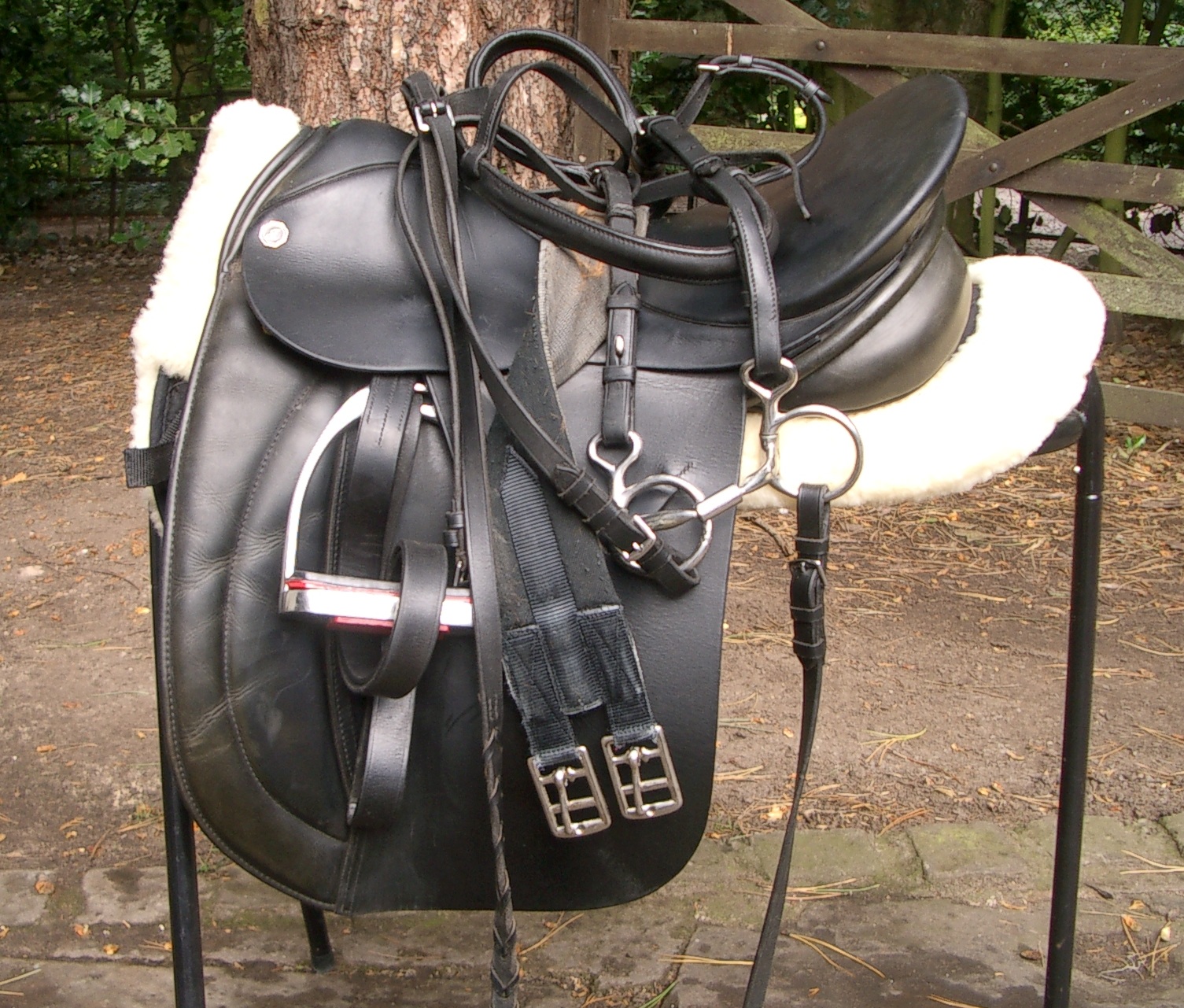
My disgusting, filthy tack, ready for some TLC.
How to do it
Step 1 – Fill a bucket with luke-warm water. Take care not to have the water too hot; this can damage the leather and made it hard and dull looking.
Step 2 – Start by stripping the bridle down. Undo all the buckles – remove the browband, headpiece, noseband, reins and both cheekpieces. If you have stud billet fastenings, undo them by pushing on the place where the strap loops over, then pulling the stud through the slit. Try to remember which holes the straps were done up on originally.

Bridle taken to pieces, ready for cleaning.
Step 3 – Now strip the saddle. Remove the numnah, girth, buckle guards, stirrups and leathers. The numnah and webbing girth can be washed in the washing machine according to the care label – try to get as much hair off as possible with a curry comb first so as not to block the machine filter. Alternatively, you can buy special wash bags – like this one, £10 from Robinsons – as this will prevent bunging up the filter, and save you from having to wear hairy shirts for weeks. Tip – put an old sock over the girth buckles at each end to prevent them from damaging the machine. A leather girth can be cleaned with the rest of the leatherwork.
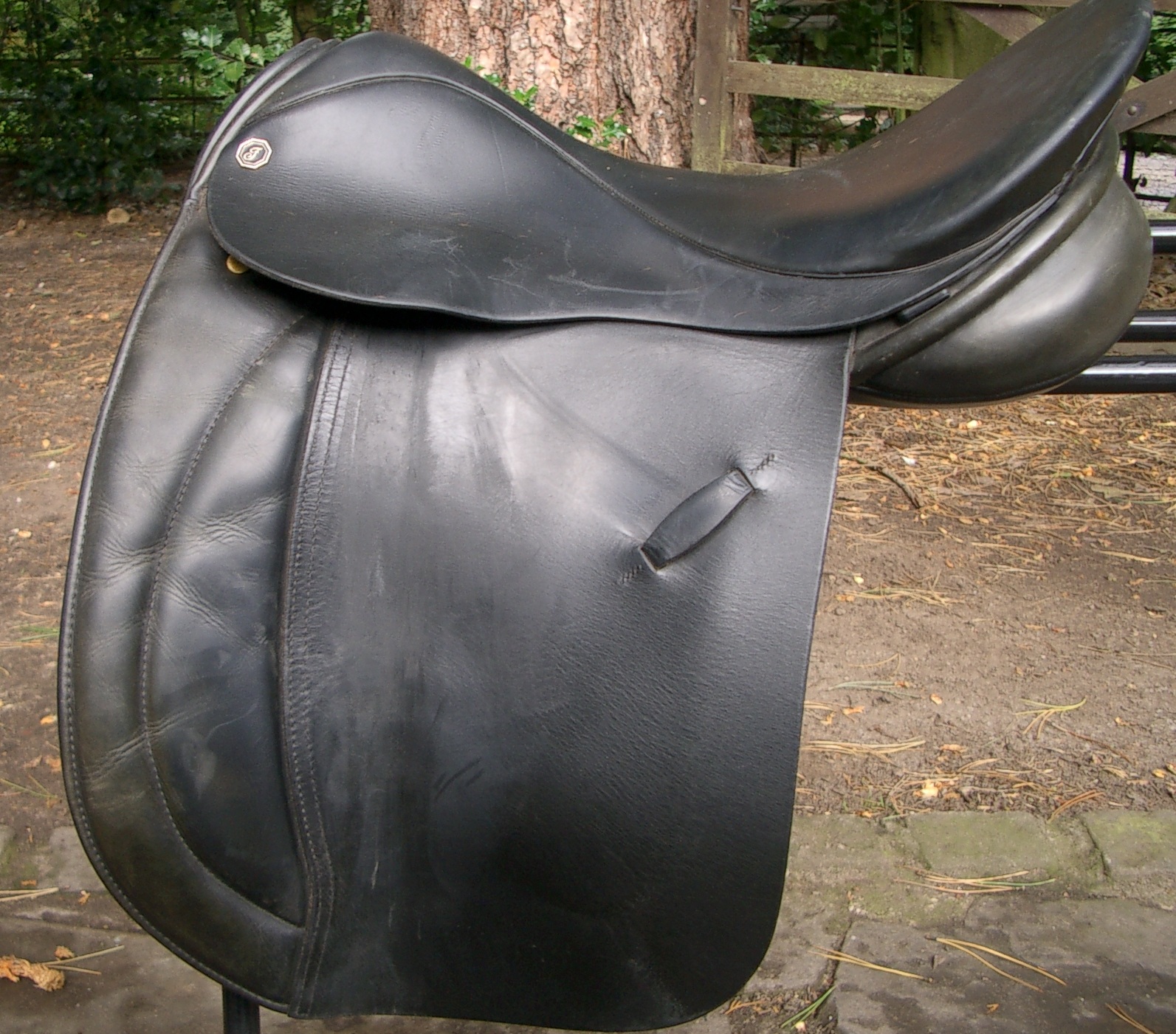
My saddle stripped down – now you can see how dirty it is!
Step 4 – Put your bit and stirrups into the bucket of water to soak. Periodically, you should take the stirrup treads out of the stirrups and wash them separately, as stirrups are prone to rusting under the treads. Tip – put bits and stirrups (minus the treads) in the dishwasher to make them come up sparkling clean.
Step 5 – Now dip your sponge into the water, and squeeze it out as dry as you can. A overly wet sponge will damage the leather and cause it to become dull. Clean each bit of leather separately, rubbing to remove any mud or grease.
Inspect the underneath of your saddle flaps. You may find little bobbles of grease clinging there, these are known as jockeys, and require some serious elbow grease to remove them! Tip – if it’s really caked on, try using a scouring pad and a tiny blob of washing up liquid.
Step 6 – Once the leather is clean, it’s time to condition it. If you have solid saddle soap (tin or bar), it needs to be slightly dampened. The best thing to do (really) is spit on it (ever wondered where the expression spit and polish came from?). Saliva is slightly viscous, which will give the soap the right consistency. It shouldn’t be too wet, and if the soap lathers up it is too wet and may damage the leather. Rub the soap into all the leather, using a circular motion on large areas like saddle flaps. Give high wear areas like girth straps, and anywhere where the leather folds, a double dose of soap as it’s very important these areas remain supple.
Step 7 – Using the cloth, wipe any stray soap off areas like buckles and stirrup bars. If you’ve got any saddle soap in the buckle holes, poke it out with something like a cocktail stick. Now retrieve your stirrups and bit and clean them with the sponge before drying thoroughly with the towel.
Step 8 – Now it all needs putting back together. Don’t forget to check that the bit is in the right way round, and everything is back on the correct holes. Tip – Try to remember to change your stirrup leathers round every time you clean your tack, as the one on the side that you mount on will stretch faster than the other.

Lovely and clean, for about five minutes.
Every six months or so, apply some conditioning oil such as Flexalan – this is also great for breaking in new tack, and rescuing oil leather that hasn’t been oiled for years. Well-kept tack shouldn’t need oiling too often, as the leather will go a bit flabby and be prone to stretching.
And that’s it! Until the next time you get wet, or have a muddy ride or……hah! Don’t you just love horses?
First aid for horse riders
The following article was first published in Gallop magazine, April 2011.
First aid for horse riders
Picture this. You’re with a group of two other riders, ambling along a country lane, chatting. Suddenly, a pheasant flies up from the hedge and spooks your friend’s young horse. She falls heavily into the road, and now there’s a car coming. Would you know what to do?

HCM members stage an accident
“It’s a nightmare scenario, but one that anyone who rides on the roads should be prepared for,” explained Jane Clayton of the North West Ambulance Service. “We can’t always stop these things happening, but we can make sure that we handle them in the best possible way.”
Jane, a senior paramedic and trainer, and her colleague, Neil Rooney, a member of the Hazardous Response Team, outlined a number of practical first aid measures during a talk on First Aid for Horse Riders at the Cheshire Horsey Coffee Morning in Mollington, Chester.
Assess and Control
“The first thing that you need to be aware of is your own personal safety,” said Neil. “If you are injured yourself, you can’t help anyone else and the situation is suddenly twice as bad. Control the loose horse if possible, and station the third rider or any bystanders on traffic watch, especially if the injured person is lying in the roadway. One rider needs to take control of the situation, and delegate tasks to others.
Once the situation is under control, then examine the casualty.
Never attempt to move a casualty unless their life is directly threatened by their location, and if they complain of any pain, ask them to lie still whilst you call an ambulance
Is the person conscious? If so, then obviously it’s a good sign. Try to discourage them from sitting up too quickly, and ask them about any neck or back pain.
Consider as well if you are going to need any other emergency services, such as the police (if the road needs blocking), the fire service (if the horse is trapped), or the vet.
If the casualty is not conscious, then it’s time to apply the ABC approach. Never attempt to move an injured person unless they are in active danger, but you can unfasten their hat strap (don’t remove the hat itself) and try to keep them warm with extra jackets.”
The ABC Approach
A – Airway Management. If the rider has fallen on their back, they may be in danger of a blocked airway. Gently hook your finger under their chin, and pull up on the chin to lengthen the area around the bottom jaw, which is a simple and safe way to remove the soft tissues in the mouth from the airway without moving the patient. You may need to keep the airway open in this way until help arrives.
B – Breathing. Is the casualty breathing? Listen for ten seconds. If you can’t hear a breath in that time, call the ambulance service immediately, and ask for their instructions.
C – Circulation. Any major bleeding needs to be stopped as soon as possible. Apply direct pressure with your hand or a pad of clothing, or indirect pressure on an artery. If possible, elevate the limb to slow down bleeding.
After Neil’s talk, it was time for the group to get some hands-on practice, applying bandages and slings to imaginary injuries, and assessing group members who’d had nasty falls from their hobby horses!
“Remember,’ cautioned Jane, ‘that if you have any suspicion of a neck or back injury, you should not apply a sling, which fastens at the back of the neck and may put pressure on an injury. A broken wrist may not be serious, but an aggravated spinal injury will be! Signs of a neck injury include problems moving the legs, pain or numbness.
After applying the sling, remember to monitor the casualty and make sure that you haven’t accidentally cut their circulation off with the bandage! Press the tip of the person’s finger for five seconds and release. The fingertip should return to a healthy pink colour within two seconds.”
Location, Location, Location
If you are out riding in a rural area, it may be some time before the ambulance can get to you, and you must give them clear instructions, or they may never find you.
If you don’t know where you are, try one of the following:
- Try to get help at a nearby house, and get a postcode for use with satellite navigation.
- Passing drivers may have satellite navigation in their cars, and be able to supply details.
- If you are able to make the emergency call from a landline, the emergency services can trace your location.
If you are out on a bridleway, you will also need to tell the ambulance crew about access points. The ambulance will try to reach you within 20 minutes, but if you are in an isolated area it could be much longer.
Shock Tactics
Any kind of accident is distressing, and everyone involved could be suffering from emotional shock by this stage. However, you also need to check your patient for signs of clinical shock, which can be fatal. Clinical shock is caused by bleeding, which may not be apparent if the bleeding is internal, so you also need to be able recognise the signs.
- Is the casualty deteriorating? For example, were they conscious and are now unconscious?
- Does their skin appear cold, pale and clammy?
- Does it appear ashen or cyanosed (blue tinted, especially around the lips)?
- Has their breathing become rapid and shallow?
- Are they feeling sick or faint?
Clinical shock may be delayed by several hours if the bleeding is slow, so whilst you wait, continue to monitor your casualty and ring 999 again to report any changes.
Preparation is Key
“Accidents can happen to anyone,” summarised Jane, “but you can be prepared. Always wear a hat, and a body protector will reduce the risk of bruising.
In addition, always wear hi-viz clothing, carry a charged mobile phone, tell someone where you are going, and, if you are going into an unfamiliar area, carry a photocopy of the OS map so that you can give a map reference if necessary. Nobody wants to be involved in an accident, but knowing how to cope may make all the difference.”
For more information on Cheshire Horsey Coffee Morning events, please visit www.horseycoffeemornings.co.uk.
Working with the Gambian Horse Trust
The following article was originally published in Gallop magazine in December 2010.
Working In The Gambia Changed My Life – And Theirs
“Common problems are Trypanosamiasis (which is known as sleeping sickness in humans)spread by tsetse flies, scarred tongues, mosquitoes and damaged limbs from hobbling.”
Like most horse lovers, Anna Saillet has seen her share of equine problems. However, during her two years of volunteer work for the Gambia Horse and Donkey Trust in Africa, she has seen sights that most of us can only imagine.
“We also routinely saw leg and harness wounds and lameness caused by lack of knowledge on the owners’ part. Parasites, infection and disease are also rife,” explained Anna, at a recent talk to the Cheshire HCM group in North Wales.
Anna studied Animal Care and has a degree in Animal Behaviour. Her love affair with The Gambia started after spotting an advert in Horse and Hound asking for volunteers to work with horses in Africa with charity The Gambia Horse and Donkey Trust. “After a telephone call with the charity that lasted 40 minutes, I realised that this was something I had to do,” she explained.
Working in The Gambia
The Gambia was a culture shock for Anna. One of the smallest countries in mainland Africa, it’s a long, narrow strip of land almost completely surrounded by neighbouring Senegal. Only 30 miles wide at its widest point, it has a population of just 1.7 million and is one of the poorest African countries. The main source of income is farming, mainly peanuts, and there is little export trade. Its rainy season and extreme heat make it ideal mosquito country, and malaria was commonplace for Anna and her co-workers.
The Gambia river runs through the middle of the country, and most of the infrastructure consists of dirt tracks except for two main roads bordering the river.
A third of the population of the country are below the poverty line. There are a huge variety of ethnic groups, each with their own language and traditions, but the population is tolerant and well-integrated. The official language is English, but many people speak only their own language. The main religion is Muslim, but Christian groups also exist.
The Trust is based in a village called Sambel Kunda, in the Central River Region. This small village, mostly populated by the Fula tribe, is at least six hours drive from the capital of Banjul, and consists of mud huts and family compounds. The huts have no electricity, and often no candles either. With candles costing about two dalasi (approximately four pence) each, an average family cannot afford to burn their money, when the typical wage is about £20 per family a month. Local water is either from wells, which are sometimes contaminated, or hand pumps, and the staple diet is rice with peanut sauce.
‘The thing I missed most was crunchy food!’ exclaimed Anna. ‘I used to dream about Hula Hoops!’
The Work of the Trust
Horses are not indigenous to the Gambia, and in fact have only been in common usage for about 30 years, having been imported from neighbouring Senegal. This unfortunately means that horses are not well adapted to the local climate and parasites, and also that there is no tradition of horse management amongst the local population.
Previously to the arrival of horses, oxen were used for transport and farming, but were too slow to be efficient. Donkeys are more suited to the environment and more resistant to disease, but slower than horses.

Little Mo ploughing June 2010
“Horses are a valuable commodity, worth about four years’ salary to the average farmer, so the people are very keen to learn correct management techniques,” Anna stressed. “Most of the cases that we see are victims of ignorance rather than neglect, which is why our school education programme is so important, as it’s often the children who are in charge of the animals. A healthy horse can increase the farmer’s productivity by up to 500%.”
However, equine life in The Gambia is hard even for a healthy horse. Malnutrition is an issue, as the staple equine diet in the Gambia is groundnut hay, made from the leaves of the peanut plant. ‘A bale of groundnut hay can cost as much as a bale of hay in the UK, and farmers who don’t grow it themselves simply can’t afford to feed sufficient quantities,’ explained Anna. Another common feedstuff is millet, which is indigestible when raw and is a major cause of colic.
Cases of trypanosomiasis (African Sleeping Sickness) are common. The disease causes weight loss and lethargy, but is normally curable once diagnosed by a blood test. Harness galls from poorly fitting and incorrect harness are something the Trust sees on a regular basis, as are scarred and disfigured tongues from the barbaric Senegalese bits in common usage. These bits have a heavy iron ring used as a curb chain, and can gradually cut off circulation to the tongue, causing damage to the tissue. Equally common is the practice of using just a knotted rope as a bit, meaning that almost 75% of the horses seen by the Trust have tongue abrasions. The Trust is gradually working to replace this horrific equipment with snaffle bits and headcollars donated in the UK.
Even well-meaning actions can have dreadful consequences, as owners often light fires near their horses to keep tsetse flies and other biting pests away. Anna has seen horses with terrible injuries caused by fire, including Molly, an orphan foal burned by such a fire. Although suffering extensive burns to her head and neck, Molly has made a full recovery at the Centre.

Molly today, finishing off the pumpkin that’s a staple food in the Gambia
An important part of the Trust’s work is their education programme. They teach Grades 5 – 7 in 10 local schools, teaching animal management with the use of interactive lessons that frequently saw Anna dressing as a donkey!
Responsibilities of the Trust
- Education – The Trust are currently undertaking a programme of courses and education in 10 local schools.
- Veterinary Treatment. The equine hospital at the centre usually has about 30 patients at any one time
- Supply of humane equipment. The Trust supply headcollars, bits, saddlecloths etc for use in place of the makeshift local equipment, which is responsible for a range of injuries
- Supply of farriery services
- Holding the Annual Horse and Donkey Show. This event – originally set up to showcase proper welfare and management – has become immensely popular. It is now shown on national Gambian TV, and people walk for up to three days to compete.
- Castration of stallions. Most of the local horses are not castrated, and the Trust will carry out this procedure if necessary.
- Attending weekly markets to monitor the condition of animals for sale
What You Can Do To Help
The Trust is always grateful for donations of equipment, including bits, headcollars, bridles, numnahs and girths. These are most useful in pony sizes, but any equipment can be used whatever its condition, as the Trust has a team of harness makers who are able to make alterations and repairs. Veterinary equipment, particularly bandages, is also welcomed, as are any left-over tubs of feed supplements. If you are based in Cheshire or North Wales and have some equipment you would like to donate, please visit the Trust at www.gambiahorseanddonkey.org.uk to arrange a pickup. Alternatively, you can help by making a donation, setting up a standing order or holding a fundraising event.
For more information on Horsey Coffee Morning events, please visit www.horseycoffeemornings.co.uk
Working Inhand
I’m a great believer in the benefits of working your horse from the ground. The methods I use are free schooling, traditional lunging, classical in-hand work and long reining.
Working from the ground is great for bringing a horse back from injury, seeing how your horse moves, teaching new skills or just filling in twenty minutes when you don’t have time to ride. I try to do some groundwork once or twice a week, and it’s very beneficial for Blue, who has a weak back. I can use groundwork to build up her back muscles without the added complication of a rider, and I taught her to rein back and turn about the forehand from the ground, so that she could learn to balance without me on top.
I’m a relatively recent convert to the more unusual forms of groundwork. I’d always lunged and longreined, but my introduction to the usefulness of free schooling came after seeing a Monty Roberts demo in 2007. I’ve started doing classical ground work even more recently, after seeing a demo with my riding club. I then took a couple of private lessons with the instructor, Emma Robinson, to get me started. It’s a great way to connect with your horse, and keeps you warm in the winter, as you move around the school with your horse. I’d recommend it to anyone, particularly people with horses that struggle to perform certain movements under saddle – but do try and get someone to show you the basics first.
The following account of the demo was published in Gallop magazine in 2010.
Getting back on the ground
As a novice at the art of in-hand work, I was interested to attend a recent demonstration at Roslyn Stables, North Wales, as part of the regular Horsey Coffee Morning events.
The demonstration started with a ‘beginners’ guide to working in hand’, by Emma Robinson. This can be useful to increase suppleness, build up a trust relationship with your horse, and allow you to pick up on subtleties of movement or issues that may be masked when riding.
‘Before you begin, make sure you are sensibly kitted out in a hat and sturdy boots that you can move in,’ explained Emma. ‘Gloves are sensible option, particularly for the first time, and a schooling whip can be helpful.’
The horse can wear a bridle, lunge cavesson or headcollar, depending on its level of training. Emma began with some preliminary work with 27-year-old Appaloosa Sky, her model for the day.
‘With the reins over the horse’s head, bring the outside rein over the neck and take a light but clear contact. The inside rein can be held at the bit ring, if it’s safe to do so, or a few inches below.’
The handler should be positioned by the horse’s shoulder. Emma then spent a few minutes re-inforcing ‘move on’ and ‘halt’ commands with Sky, until he was obedient to her voice. With a well established horse like Sky this was a quick process, but a vital first step. The handler should work in silence unless giving a command so that the horse is not overloaded with meaningless words. Gradually, Sky learnt to respect Emma’s body space, keeping an even distance from her and moving around or away from her as required.
Once he was moving freely round the arena and responding to voice commands, Emma started to introduce some simple lateral work. Asking him to bend via slight pressure with the inside hand, she turned a little away from him to allow him to bring his inside legs off the track, before repeating the exercises on the opposite rein. Emma explained that this was enough for a first session, as any new work is tiring at first.
The next section of the demonstration covered long-reining, courtesy of Becky Jones and her lovely homebred part Andalusian Simba. Becky uses classical French techniques, and has trained with François Lemaire de Ruffieu, formerly of the celebrated Cadre Noir.
This stage involved a bridle, lunging roller and long reins for the horse. The handler should wear sturdy boots, and gloves and a hat are advisory, at least when you first start your horse. Becky recommended using leather long-reins, joined into one continuous length, for more advanced work. However, it is fine to start by using two lunge lines, which give the novice handler the advantage of being able to stand further away from the horse in a safer position, although they are bulkier to hold.
Although normally working to a fairly advanced level, Simba kindly agreed to pretend to be a novice for the demonstration, and Becky demonstrated the use of the equipment for a new starter or young horse. Initially, the inside rein is ‘reversed’, i.e. clipped to the roller, then fed through the bit ring to the handler’s hand. The outside rein is attached normally, i.e. clipped to the bit, fed through the roller ring and over the horse’s back to the handler’s hand. ‘The natural tendency of the horse when starting this kind of work is to bend to the outside, and this arrangement of the reins allows him to soften and encourages a more correct bend,’ she explained.

Becky and Simba demonstrate the correct position for longlining
The handler starts off by walking parallel with the horse, level with the roller, at a distance of 6 – 8 feet. As the horse becomes more advanced and more comfortable with the technique, the outside rein can be dropped behind the haunches and the handler can move behind the horse.
When working, the handler should keep their arms fairly loose and ‘hold’ the horse with their back rather than their hands. Becky asked the audience to imagine walking down a ramp holding onto a laden wheelbarrow to replicate the feeling of ‘passive holding’.
The demonstration continued with an impressive display of lateral work – shoulder-in, leg yielding and half pass. Becky explained how she used rhythmic taps of the rein against Simba’s flank to mimic a leg aid and encourage him to move away from her. She pointed out how Simba ‘grew‘ in height as he started to work from behind, as the energy created by these exercises was not being dissipated in forward movement.
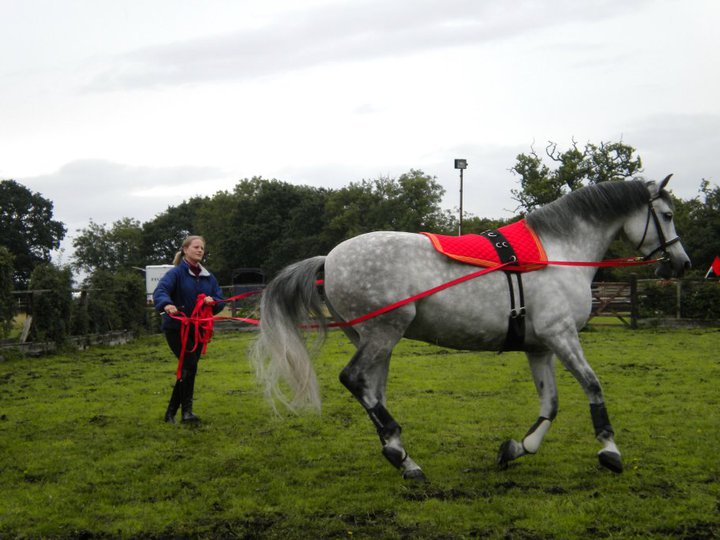
Simba cantering on longlines
As a finale, Simba was persuaded to show his more advanced paces, including a newly acquired Spanish walk, but when Becky asked him to demonstrate his ‘terre à terre’ (a very collected two-beat canter, in which the horse moves forward in a series of controlled rears), he suffered from an attack of stage fright and declined to co-operate.

Simba shows off his Spanish walk
Overall, the demonstration offered an interesting overview of the advantages and techniques of working in-hand, and will hopefully lead to a workshop to be held later in the year.
Information on this and future events can be found at www.horseycoffeemornings.co.uk.
The pitfalls of being a horse lover in France
Occasionally, when I’m talking to friends in the UK about the fun I have with my French riding club, I get a slightly wide-eyed reaction.
“But they eat horsemeat in France, don’t they? How does the riding club feel about that?”
Well, the simple answer is that I don’t imagine they’ve given it too much thought, as it’s something that’s culturally accepted in France, although it does seem to be getting rarer.
When I lived in France in the early 90s, you could still see some dedicated horsemeat butchers in various towns, and it was quite common to see ‘cheval’ on a menu. Now, it’s rare to see it listed on a menu, and although our local supermarket does stock it, it’s limited to a single option among a vast range of other meats. New EU labelling regulations also mean that meat in supermarkets is far more clearly labelled than it used to be, so there’s not much danger of the unsuspecting tourist buying it by accident.
The horses used for consumption also seem to be completely separate from the riding breeds. Some locals in my area (the Midi Pyrenees) have taken to breeding horses for meat again in an attempt to preserve rare breeds, much as British beef farmers did with Shorthorn cattle. Like many British sheep, pigs or cows, if the animals weren’t being bred for meat, they wouldn’t be bred at all, and the heritage breeds would die out.
The meat horses look different to riding horses, as they tend to have very broad backs and exceptionally well-muscled rumps, and are in general much heavier – again, like beef cattle compared to dairy cattle. It’s common to come across a few ‘meat horses’ grazing on the mountains or in fields, and they’re often in company with herds of sheep or cattle.
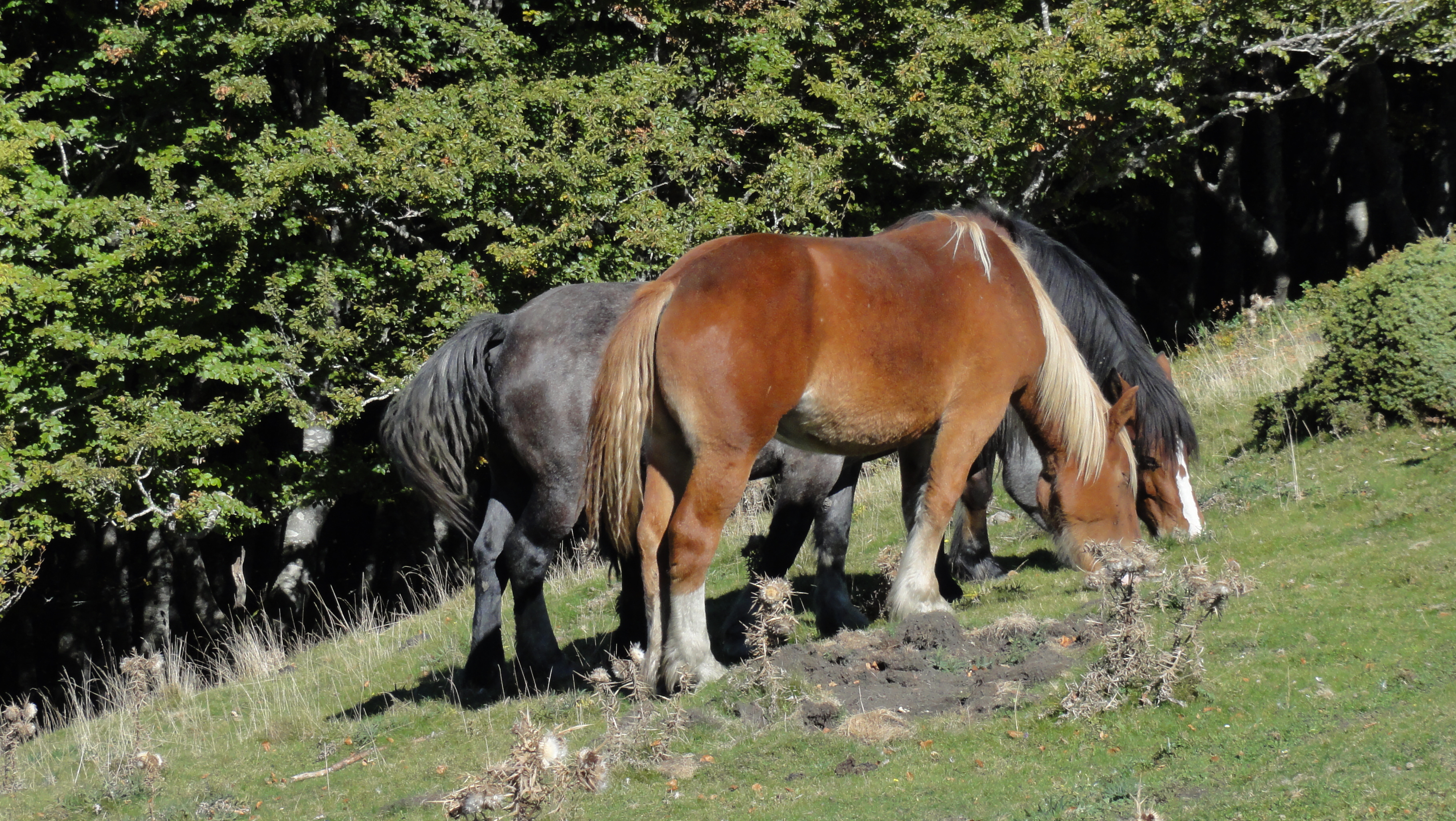
'Meat' horses grazing in the Pyrenees
All the French horse riders I know are as dedicated to the health and happiness of their riding horses as we are in the UK, and I guess get round the horsemeat ‘problem’ by thinking of the meat horses as a different animal. Horses for courses, as we might say.
Drivers vs. horses – who comes out on top?
Riding on the roads is a subject I’ve been meaning to write about for a while, and seeing this article in the Daily Mail has reminded me.
Briefly, the story involves a young rider called Charlotte Watmough, who was out for a (presumably solitary) hack with her horse, Merlin. She asked an approaching van, driven by Nadeem Hussain, to slow down, using the universal signal of raising and lowering an extended arm. Hussain apparently took offence at this, and reversed the van into Merlin, causing him to back into a wall and rear. The driver was sentenced to 10 months in prison. Charlotte was apparently wearing hi-viz and a proper hat, but the Daily Mail is a little short on relevant details.

Be safe, be seen - always wear hi viz clothing if you've going on or near a road. Photo Des Blenkinsop
All of us know how terrifying riding on the roads can be, even on a steady and sensible horse. In my opinion, most problems are caused by oblivious drivers who simply don’t know how to pass a horse safely. Sadistic drivers who go out of their way to frighten you and your horse are thankfully in a minority, but they do exist, and I’ve met some of them. Some of this latter group of drivers seem to think that horses shouldn’t be on the roads at all, and it’s therefore fine to try and force them off. Without getting into this patently stupid discussion, drivers need to remember that:
- Most horse riders would far rather ride off road, but simply have no facilities to do so. I’m in a very horsy area, but we have hardly any bridle paths, and none that require no road work to reach them.
- Horses can be scared by seemingly illogical things – a trailer bumping, a car driving through a puddle, a bird flying out of a hedge that causes the horse to step into traffic. Slowing down completely – to 10 miles an hour – and giving horses a wide berth is the only safe way to pass.

Most riders would prefer to ride off-road, but don't have the opportunity. Photo Richard Croft.
I’m surprised that, in the Daily Mail case, the rider managed to secure a conviction, unless there were independent witnesses of the accident. I know of many people who have had incidents of this kind, but the police haven’t been able to do anything. One rider was out for a ride when a lorry failed to stop at a junction and skidded into the horse. Neither horse nor rider were seriously hurt, but the rider became terrified of riding out on the roads. She later called the police, who interviewed the driver, but the police didn’t take any action as there were no witnesses and it was a case of the driver’s word against the rider’s.
Every rider who rides on the roads has tales of unbelievable stupidity and rudeness by drivers. I’ve been overtaken by a coach on a single track road, so narrow that normally bicycles have to wait to pass. There was so little room that my outside knee was scraping against the side of the coach, whilst my inside knee was in the hedge. Fortunately I had a very quiet, calm pony who didn’t panic – if he had done, I would almost certainly have been seriously hurt as there was simply nowhere to go. I’m sure the coach driver wasn’t trying to force me off the road, just not thinking – but the result would have been the same. I should have reported him – but I was too shocked to take his number, and I’m not sure it would have got me anywhere, as neither of us was hurt.
Fortunately, as there are so many horses on my local roads, most of the local drivers are extremely ‘well-trained’ and courteous. Many of them go to huge lengths: pulling well over, waiting politely for a safe place to pass, sometimes even rolling down a window and asking if it’s OK to overtake. The tractor drivers are generally particularly considerate – I’ve known drivers pull in and turn their engines off so that I could pass, which must be a real pain on a busy day. I do always make a point of acknowledging courtesy though, and get annoyed when I see riders that don’t – after all, it’s always irritating to make an effort that’s not appreciated. Equally. many riders are not always that courteous towards drivers, forcing them to wait a long time for a suitable overtaking opporunity whilst they chat to their friends. On a narrow lane, riders should trot on towards a suitable passing place, such as a gateway, to minimise waiting time for a patient driver.
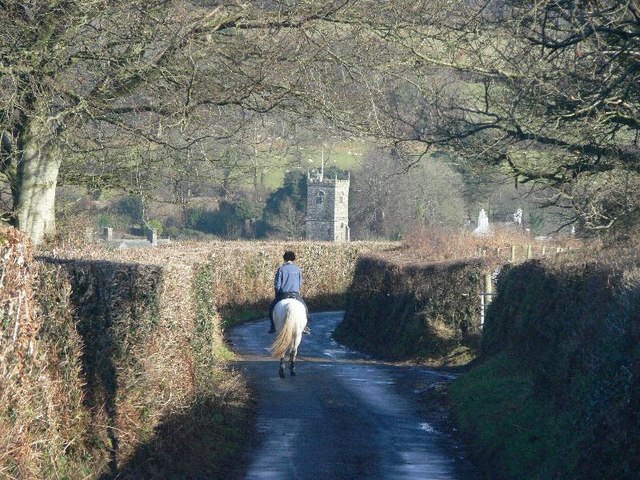
Country lanes are often too narrow for a car to pass safely. Photo John Davey.
I do think that most drivers who cause accidents simply don’t know how to pass horses safely, with drivers who cause accidents deliberately being few and far between. The solution could be a better programme of education, with guidelines for passing horses being included as part of the driving test. The case of Charlotte Watmough is hopefully a positive sign for all of Britain’s riders – if these incidents are being taken more seriously, it can only improve safety for all road users.
Top Five Tips for Safe Riding on the Roads
- Consider taking your BHS Riding and Road Safety Test
- Behave courteously towards drivers and other road users
- Wear a suitable hat and clothing
- Check your horse’s shoes and feet regularly
- Check your tack regularly for any safety issues
The first fun ride of the year
On Bank Holiday Friday, I decided to eschew my traditional Easter pastime of stuffing myself stupid with chocolate – and only partly because no-one bought me any Easter eggs this year. Every Good Friday, one of the local hunts organises their annual fun ride, and I decided this was the year to go.
Now, as I don’t live in outer space, I’m well aware of how controversial hunting is. Personally, I have very mixed feelings about it. I’ve been vegetarian for a long time, and like most vegetarians, have found my own limits over the years. (Which are, if you’re interested: no to meat, suet and gelatin; yes to milk, eggs and occasionally rennet.) I also (unlike many meat-eaters of my acquaintance) have no qualms about carrying out ‘mercy killings’ of half-squashed mice and half-run-over rabbits.
As I do live in the countryside, I know how much damage foxes can do, killing chickens, ducks and even baby lambs, often in numbers far beyond what they need for food. And foxes are hard to kill. Traps and poison are both non-species specific, and are extremely unpleasant ways to die. It’s very hard to shoot well enough to kill a fox outright, rather than just wounding it so that it dies slowly. Hunting with hounds does work – but is it justified? I understand the arguments on either side, and my feelings are still mixed.
However, one thing I’m very clear about is that the hunt know how to plan a fun ride! This year’s event was planned to take place in the grounds of a private estate, not normally open to the public. The chance of a 10-mile ride, completely off-road, with purpose-built hunt fences, was too good to be missed, and we set off bright and early in the morning to arrive at the start time.

Hyper but happy!
We were the second group out onto the course, and Blue was instantly over-excited. We haven’t done much fast work so far this year, and finding herself in an open field with lots of other horses was just too much. Ironically, all the work I’ve been putting in over the last six months strengthening her quarters rather blew up in my face, as she set off up the field with an immensely powerful bound that brought tears to my eyes! In no time, we were going so fast that we over-took the stewards, still busy marking the course out. We completed the full 10-mile course in an hour and 15 minutes, and I could barely walk the following day! We didn’t try any of the lovely-looking jumps, but had Blue been in a slightly less hyper mood, there were several obstacles I would have tried.
The verdict? A fantastic ride. The chance to ride over new ground, in a safe environment, was a real change from battling tractors and speeding cars on our normal hacking routes, and Blue certainly appreciated the chance to have a proper pipe-opener. I haven’t been converted into a fully-fledged hunting addict, but I’ll be doing more fun rides, and maybe the odd outing with a drag pack.
Have mallet, will travel – Polo in the Pyrenees
Over the course of a long and chequered horsy career, I’ve been lucky enough to have a go at most equine activities, from eventing to dressage. However, despite living in Cheshire, a county awash with polo clubs and shiny four wheel drives, I’ve never had the opportunity to try polo. This hasn’t caused any sleepless nights, as I’d always considered the sport of kings required a suitably royal bank balance, but it’s always proved a slightly irritating gap in my horsy CV.
One morning in late 2011, I’m hacking around the Cheshire countryside with a couple of friends when my phone rings. A voice with a strong French accent enquires, “Sara? Jean-Francois at the Club d’Equestre has given me your name. Do you want to come and play polo, the next time you’re in France?”
Just try and stop me. And so, a few weeks later, I’m standing in a muddy field on top of a mountain ridge in the French Pyrenees with my mentor Jean-Rene. Jean-Rene, a retired maxillofacial surgeon, loves polo so much that he runs his own string of ponies, including a mare he trained himself. He discovered the game later in life, but has made up for it since. Every weekend, he can be found stick-and-balling along the ridge of the top field (the only place flat enough for miles around), and he’s just keen to teach me as I am to learn. “I need someone to play against!” he explains. Polo is far less popular in France than it is in the UK, and the nearest club is over an hour away in Toulouse.
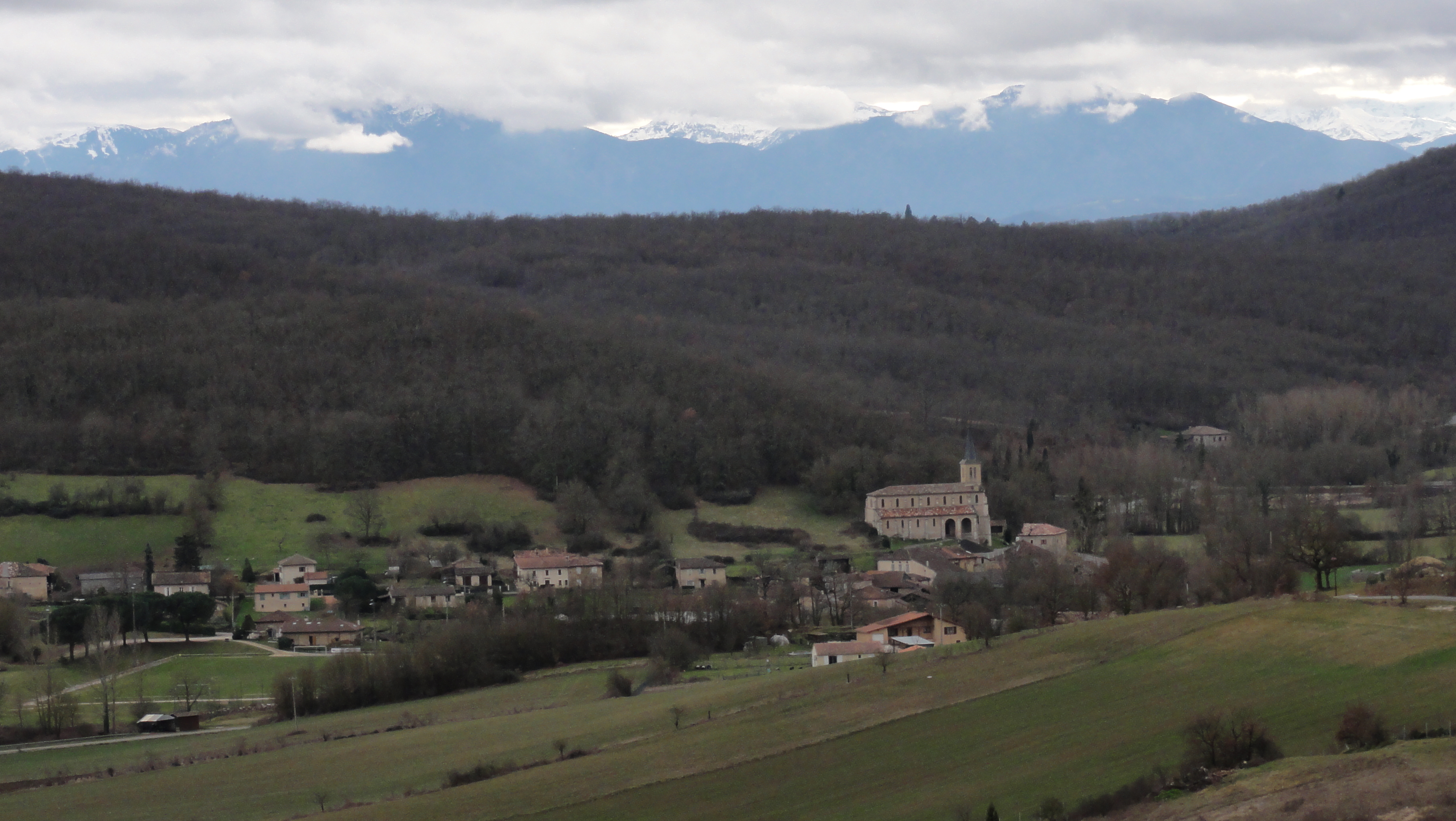
The view from the back of the 'polo pitch'
My mount is Gringo, a trained polo pony brought all the way from Chantilly, the hub of French polo. Jean-Rene mounts Pacifique, a smaller fleabitten grey mare he trained himself. I’m shown how to hold the mallet (thumb through the wrist strap, let the strap trail over the back of the hand. Turn the hand over and hold the grip like a tennis racket), then how to make the swings without hitting myself or Gringo. After a little while, I’m ready to try it on the move. Jean-Rene positions three balls in a line, and asks me to ride up the line at a walk, trying to hit each ball in turn. I’m not much good at controlling Gringo with both reins in my left hand, but fortunately he knows the game, and walks over to the first ball with little input from me.
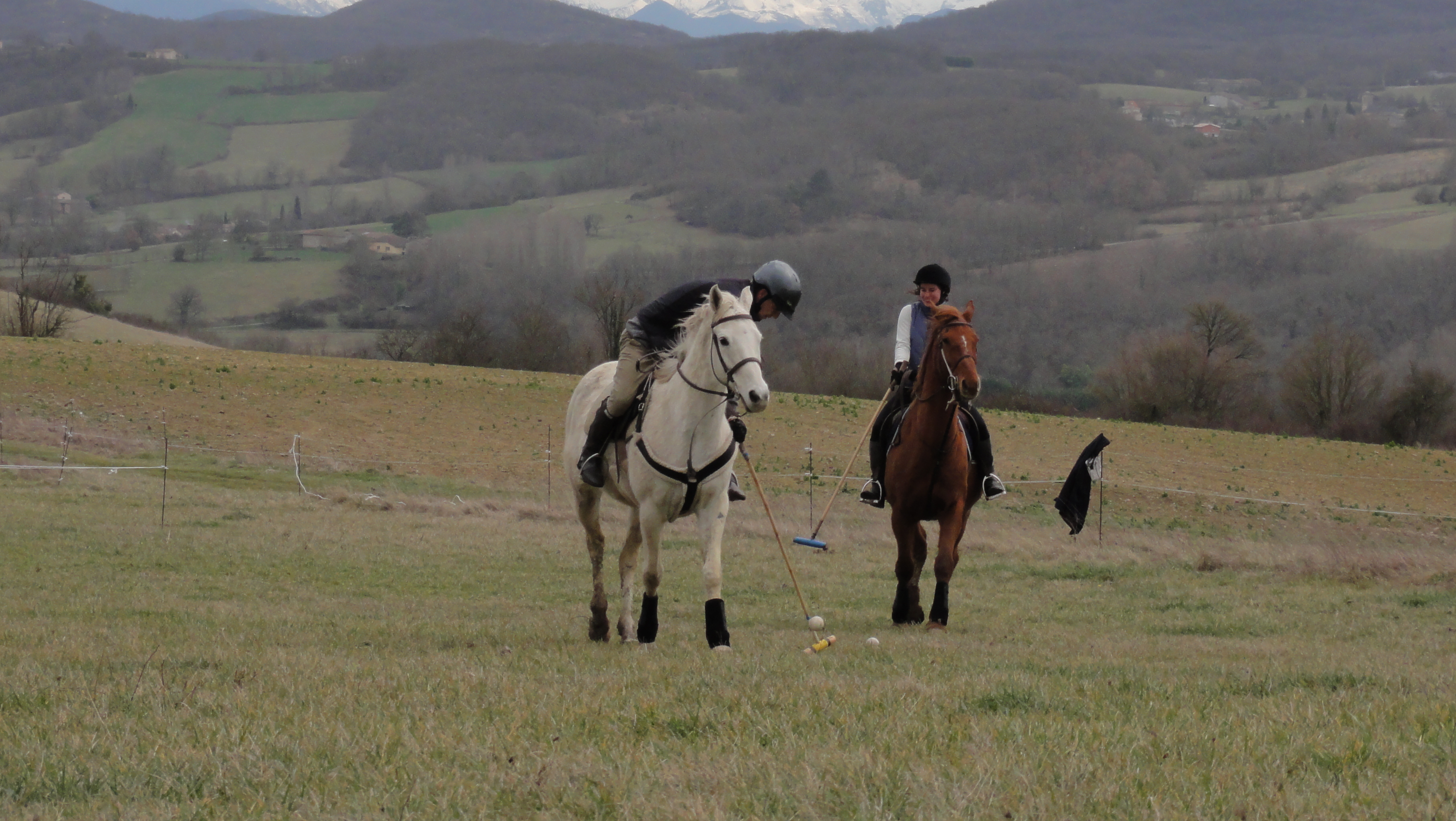
Learning the swings
To start with, I’m fearful of hitting Gringo’s legs and don’t ride close enough to the ball, forcing me to lean uncomfortably out of the saddle.
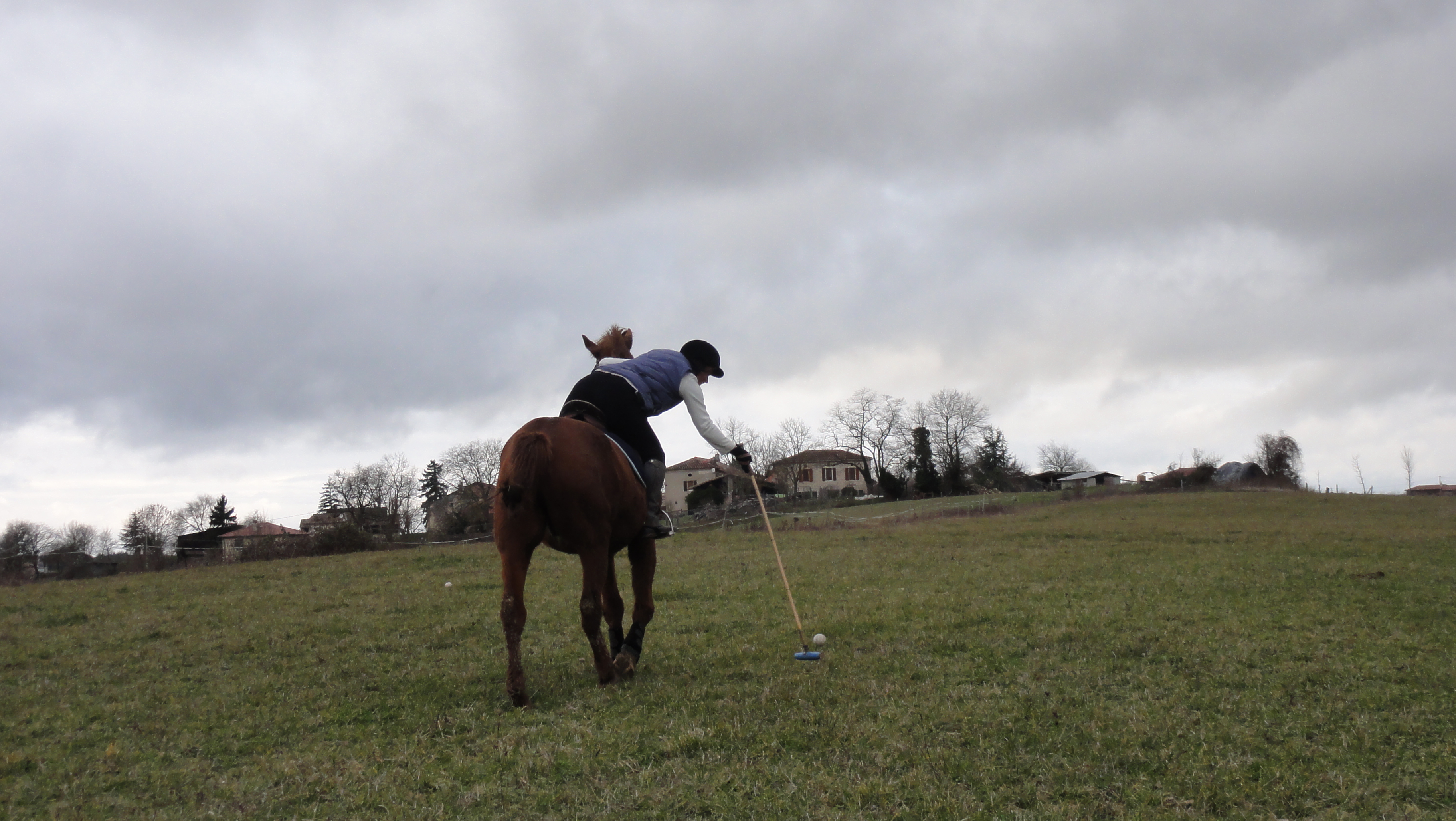
The ball's just within my reach as I try to take a safety-first approach
“Hit the ball along the line of the horse,” explains Jean-Rene. “You won’t hit him, particularly not at a walk.” On my next approach I’m bolder and manage a respectable ‘twock!’ as mallet hits willow. The ball only trickles a few inches before sticking in a tuft of grass, but that’s what happens when you don’t have a full-time groundkeeper.
After a few more practice runs, Jean-Rene decides I’m ready to move up a level and trots along side, ready to block me every time I swing. I immediately go to pieces, so we repeat the exercise in walk until I can hit the ball most times, even with Jean-Rene defending.
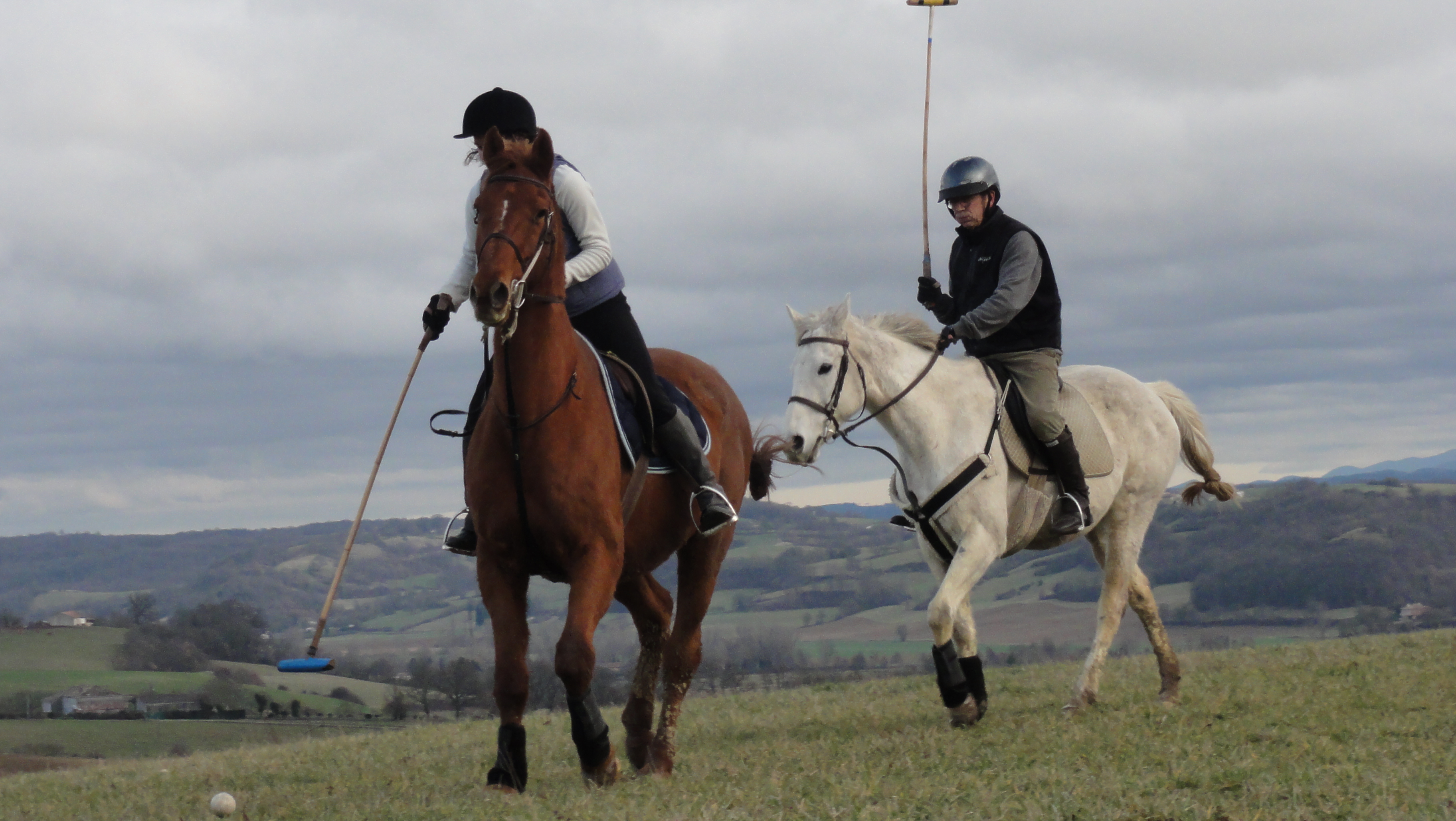
Getting better - and look at that view!
It’s time to stop. My shoulder and wrist are starting to ache from the unaccustomed exercise, and it’s getting cold as we go out into the field to round the balls up for the last time. As Jean-Rene flicks the last of the balls in my direction, Gringo stamps on it heavily and grinds it into the mud. Dismounting to dig the ball out with a penknife, Jean-Rene comments wryly, “I bet this doesn’t happen at Hurlingham.”
The final verdict? Fantastic! Even playing with two people in a windswept field is a big adrenalin kick, and I’ll be coming back for more. To try polo for yourself, sign up for a trial lesson in the UK at a club near you – some clubs offer group starter lessons from only £40.


 The Write Horse